




Table of Contents
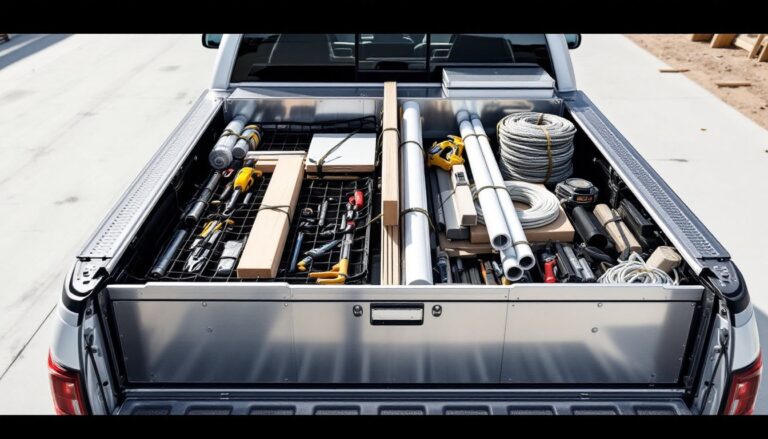
ToggleA disorganized truck bed is a productivity killer. Tools scattered loose shift and rattle during drives, can get lost, and take forever to locate when you need them on the job. Whether you’re a contractor hauling equipment daily or a homeowner tackling weekend projects, proper truck bed tool storage transforms chaos into efficiency. The right setup protects your investment, keeps tools within arm’s reach, and makes every trip safer. From locked toolboxes to modular drawer systems, this guide walks through seven proven storage solutions tailored to different workflows and budgets, so you can pick the approach that fits how you actually work.
Key Takeaways
- Truck bed tool storage systems reduce setup time on job sites by keeping tools organized and accessible, saving contractors hours of productivity each week.
- Crossbed toolboxes maximize width and hold 30–60 cubic feet, while side-mount options preserve open bed space for larger materials, allowing you to choose based on your cargo mix.
- Layer your truck bed organization with three tiers—a primary toolbox, portable caddies for consumables, and magnetic strips for essentials—to balance security, access, and protection.
- Sliding drawer systems cost $1,500–$4,000 installed but pay for themselves within a year for high-volume contractors through time savings and theft prevention.
- Truck bed liners ($200–$1,500) protect tools from rust, moisture, and collision damage while reducing rattling noise during transport.
- Locked storage mechanisms deter opportunistic theft on job sites and extend tool life by preventing exposure to weather and environmental damage.
Why Proper Truck Bed Organization Matters
A well-organized truck bed isn’t just neat, it’s a practical necessity. Tools sliding around during transport cause damage to both the equipment and truck bed itself. Safety is the bigger concern: loose items become projectiles in sudden stops, and searching for the right tool while balancing tools in the truck bed increases accident risk.
Organization saves time on every job. When you know exactly where each tool lives, you spend minutes locating what you need instead of ten. For contractors running multiple jobs per day, that efficiency stacks up to hours saved each week. Beyond productivity, proper storage extends tool life. Secure storage prevents rust (by keeping tools dry and protected), collision damage, and theft.
A locked storage system also deters opportunistic theft on job sites. Most professional truck bed setups include locking mechanisms for this reason. Even for hobbyists, keeping tools organized means fewer duplicates purchased out of frustration, which saves money over time.
Toolbox Systems: The Foundation of Truck Bed Storage
A dedicated truck bed toolbox is the anchor of any storage setup. These come in two main flavors: traditional toolboxes that sit on top of the bed and integrated drawer systems that slide into the truck bed. Traditional toolboxes are affordable, portable (you can transfer one between vehicles), and work with any truck. Drawer systems take more upfront investment but maximize under-bed space and offer superior security.
When choosing a toolbox, consider access patterns. Do you need everything accessible from the side, or is reaching over the cab acceptable? Metal toolboxes (steel or aluminum) are durable and security-focused: plastic options are lighter and rust-proof but less secure. Aluminum toolboxes resist corrosion and weigh less, important if your truck has payload limits.
Dimensions matter: nominal bed width on a standard truck is 48 to 60 inches. A crossbed toolbox typically runs 48 to 54 inches wide. Measure your actual bed width before ordering, many trucks have bumper step extensions that eat into usable width.
Crossbed Toolboxes vs. Side-Mount Options
Crossbed toolboxes span the truck bed from side rail to side rail, usually behind the cab or in the middle. They maximize width but reduce open bed space. Best for contractors who carry a high volume of hand tools and fasteners. Side-mount toolboxes attach to one rail, leaving the opposite side and center bed clear for larger materials. Better for mixed loads (tools plus lumber, drywall, etc.).
Crossbed models typically hold 30–60 cubic feet: side-mount options range 10–30 cubic feet. Lock mechanisms on quality toolboxes use keyed or combination locks and reinforced latches, essential for job-site security. Budget $200–$1,200 depending on size and material.
Portable Tool Storage Containers and Caddies
Not every tool lives in a fixed toolbox. Portable tool caddies and open containers fill the gap for mid-job access and smaller tool sets. A basic plastic tool caddy with a handle costs $15–$40 and works great for nails, screws, levels, and measuring tapes, items you grab frequently and don’t need locked.
These caddies stack neatly in a truck bed corner and move onto job sites easily. Contractors often dedicate one caddy to site-specific tasks (drywall hangers use a different caddy than framers). The portability is the win here: grab the caddy, step out of the truck, and everything you need for that phase is in hand.
Magnetic tool holders and quick-grab strips clip to truck bed rails for frequently used items like screwdrivers, wrenches, or nail guns. These are cheap (under $30) and save the “where did I put that?” moment mid-task. For painters and stainers, a rolling painter’s caddy with separate compartments for brushes, rags, and cans is invaluable.
The key: caddies work best as supplements to a primary toolbox, not replacements. Use them for consumables (fasteners, sandpaper, caulk) and daily-use tools: lock away expensive equipment and power tools in the main storage. According to Family Handyman and similar DIY resources, many professionals layer three tiers: main toolbox, portable caddies, and magnetic strips for the essentials.
Wall-Mounted Racks and Pegboard Solutions
Wall-mounted storage inside a truck cab extender or enclosed truck bed uses vertical space most DIYers ignore. Installing a pegboard panel on the interior sidewall of a truck bed liner (or cab extender) creates a customizable display for hand tools, levels, and small power tools. Pegboards are cheap ($30–$80) and infinitely adjustable with replaceable hooks.
This setup works especially well in crew cab trucks where the bed is smaller but the cab has interior wall space. You can mount a 26-inch by 48-inch pegboard on one cab wall, hook in your drills, impact drivers, circular saws, and tape measures, and have everything visible and organized. Just make sure pegboard mounting brackets are rated for vibration, regular drywall anchors rattle loose on rough roads.
For full-size beds, heavy-duty aluminum rail systems ($150–$500 per section) bolt to truck bed sidewalls and accept various hook, basket, and shelf attachments. These scale up professionally and handle vibration better than pegboard. They’re ideal for contractors who customize storage by season or project type.
The trade-off: wall-mounted systems reduce bed space. They work best when the truck bed is used for tools first and cargo second. If you regularly haul plywood, drywall, or bulk materials, wall racks aren’t practical.
Maximizing Space with Drawer Systems and Liners
Sliding drawer systems are the premium tier of truck bed storage. These consist of modular drawers that roll on ball-bearing slides, typically mounted under a hard tonneau cover or bed cover. The advantage: you access tools without digging through a single compartment, and items stay organized even on bumpy roads.
A standard sliding drawer system includes 4–6 drawers per truck bed, each with customizable dividers. Materials range from plastic (lightweight, rust-proof) to steel (heavy-duty, professional-grade). Costs run $1,500–$4,000 installed, but contractors doing high-volume work recover that investment within a year through time saved and theft prevention.
Drawers pair naturally with a truck bed liner, whether rubber, plastic, or spray-on. Liners protect the bed from tool impacts, moisture, and corrosion. A rubber bed liner (OEM Nissan, Ford, or aftermarket) costs $200–$600: spray-in liners run $500–$1,500. Liners alone don’t organize, but they protect tools from rust and reduce shifting noise during drives.
Smaller DIY budgets can start with heavy-duty plastic organizer trays ($40–$150 each) that subdivide toolbox or truck bed space. Stack them, partition with wood dividers, and customize compartments for nail guns, fasteners, and small power tools. Popular Mechanics covers many affordable options for crews mixing storage tiers. The strategy is layered: base liner, primary toolbox, then subdivided containers or drawers for specific task categories.
Conclusion
The best truck bed storage setup matches your workflow and budget. Start with a solid toolbox system, crossbed or side-mount, as your foundation, then add portable caddies for consumables, wall racks for daily-use items, and drawer systems or liners to fill gaps. Layer protection: locking storage for expensive tools, visible access for essentials, and organized compartments so nothing rattles loose. Visit Fix This Build That for workshop setup inspiration tailored to truck storage. Every dollar spent on organization now saves hours of lost productivity and prevents damage that costs much more to repair. A few hours organizing your truck bed pays dividends on every job for years.