




Table of Contents
ToggleA truck bed’s open design is both a blessing and a curse. Sure, you can haul almost anything, but keeping tools, gear, and cargo organized without custom storage is nearly impossible. Items shift during transit, tarps don’t hold moisture at bay, and you’re constantly rearranging things to fit what you need. The right truck bed storage system transforms that open space into functional compartments, protecting your investment, securing cargo, and making daily work or weekend adventures easier. Whether you’re a contractor, weekend warrior, or weekend hauler, a well-planned storage solution pays for itself in convenience and peace of mind.
Key Takeaways
- A truck bed storage system transforms open cargo space into organized compartments that protect tools, secure cargo, and eliminate the need for constant rearranging during transit.
- Unorganized truck beds create safety and efficiency problems including load shifting, water damage, DOT violations, and reduced resale value—all preventable with proper storage solutions.
- Main storage options include crossbed and side toolboxes ($400–$1,200), bed dividers, cargo nets, and underbody compartments, each suited to different work styles and hauling needs.
- Choose your storage system based on three factors: what you haul most often, your budget, and whether you prioritize quick access or maximum capacity.
- Most truck bed storage systems can be DIY-installed with basic tools in an afternoon, though complex projects like welding custom frames or installing hard tonneau tops typically require professional help.
- The right investment in organization pays for itself through convenience, reduced load damage, and improved truck resale value.
Why Truck Bed Organization Matters
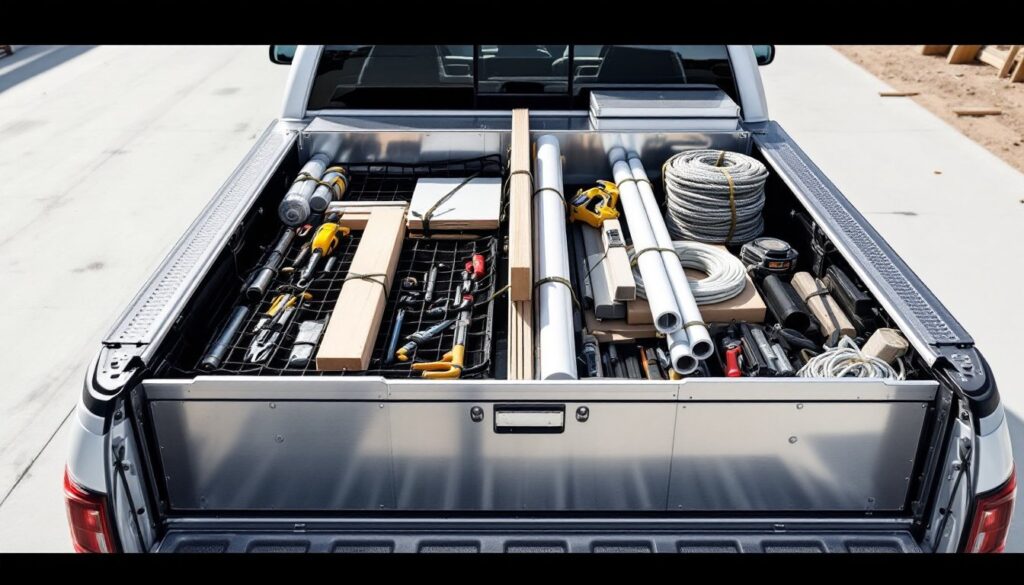
An unorganized truck bed creates safety and efficiency problems that compound over time. Loose tools slide into the wheel well, cargo shifts mid-drive and damages its surroundings, and you waste time digging for what you need on the job site. Beyond the practical headaches, unsecured loads can violate DOT regulations and create liability if something falls onto another vehicle.
A proper truck bed storage system keeps everything in its place, reduces load damage, and makes it easy to find what you’re looking for, no more frantic searching under bundles of rope and tarps. Water damage is another silent killer in truck beds: without proper compartmentalization, rain pools under items and causes rust on tools and decay on wood. Organization also protects your resale value: potential buyers want to see a truck that’s been cared for, not beat up inside and out.
Types of Truck Bed Storage Solutions
Truck bed storage comes in several categories, each suited to different work styles and cargo types. Understanding the main options helps you pick a system that actually fits your routine, not just looks good on the lot.
Toolboxes and Lockable Compartments
Toolboxes are the workhorses of truck bed organization. Crossbed toolboxes sit behind the cab and span the bed width, offering easy access and tons of capacity for hand tools, fasteners, and small equipment. Side toolboxes mount along the bed rail (driver or passenger side) and take up less central space, making them ideal if you haul lumber or long materials. Underbody toolboxes sit low beneath the bed for weight distribution and don’t block cargo space, great for contractors who need quick access to tools without sacrificing hauling capacity.
Most toolboxes come with heavy-duty latches and locks: aluminum versions are lightweight and rust-resistant, while steel offers maximum durability at a slight weight penalty. Plan on spending $400–$1,200 depending on size and material. Look for weatherstripping and internal drainage to keep moisture out.
Bed Dividers and Cargo Management
Bed dividers are simple but effective: they’re vertical panels or adjustable bars that split the truck bed into sections, keeping long materials from sliding around and preventing cargo from mixing. They work well paired with toolboxes or as a standalone system for tradework where you need to separate different job materials.
Tie-down systems and cargo nets are lower-cost partners to dividers: they anchor your load and keep smaller items from bouncing around. If you frequently haul different cargo types, a modular system with adjustable dividers is more flexible than a fixed setup. Organizing your truck bed thoughtfully saves time on the road and at the site.
How to Choose the Right System for Your Needs
Choosing a truck bed storage system depends on three things: what you haul most often, how much you’re willing to spend, and whether you need quick access or maximum capacity.
Start by auditing your truck’s use. If you’re a residential plumber hauling PVC, copper, and hand tools, a side toolbox plus bed dividers keeps pipes organized and tools within arm’s reach. If you’re a landscaper with shovels, rakes, and mulch, you need robust cargo tie-downs and possibly a headache rack to secure long-handled tools. For general contractors handling mixed loads, lumber, drywall, power tools, fasteners, a crossbed toolbox plus underbody storage maximizes usable space without eating into hauling height.
Consider bed size too. A standard 5.5-foot bed on a single-cab truck limits storage: a 6.5 or 8-foot bed gives you more breathing room. Measure your truck’s bed dimensions (length, width, and depth) and the clearance height to your tonneau cover or cap if you have one, a toolbox that sticks too high won’t fit.
Budget matters. A basic cargo net and tie-down kit costs under $100 and works fine for light, occasional use. A mid-range system, toolbox plus dividers, runs $600–$1,500. Heavy-duty commercial setups with locking compartments, drawers, and slide-out trays can exceed $3,000. DIY wooden truck bed storage plans offer a cheaper alternative if you’re handy and have time to build custom compartments from plywood and 2x4s.
DIY vs. Professional Installation
Many truck bed storage systems bolt on with basic hand tools and take an afternoon to install. Others demand drilling, welding, or fabrication skills that most DIYers don’t have.
DIY-Friendly Options:
- Bed dividers bolted through existing bed cleats
- Cargo nets and tie-down straps (no installation needed)
- Aftermarket tool trays that slide into existing bed rails
- Tonneau covers and bed covers (some require drilling the bed rails, manageable with a power drill and 1/4-inch bits)
When to Call a Pro:
- Installing an aluminum bed cover or hard tonneau top (requires precision drilling and weatherproofing)
- Welding a custom frame or rack to support a headache rack or stacked storage
- Fabricating underbody toolbox mounts that need structural reinforcement
- Working with sliding drawers or modular systems that demand exact measurements and alignment
Most crossbed toolboxes come with bolt-on mounting hardware and a detailed install manual, totally doable for a homeowner with a socket set and a few hours. Building your own truck bed storage with step-by-step guides can save hundreds of dollars if you’re comfortable with basic carpentry and hardware installation. Wear work gloves and safety glasses when drilling the bed rails: metal shavings are sharp and can lodge in your eyes.
If you’re uncertain about drilling into your truck or damaging the bed warranty, get a quote from a local shop. Many installers charge $100–$300 for labor, which is reasonable peace of mind if you’re uncertain.
Conclusion
A truck bed storage system isn’t just about looking professional, it’s about protecting your tools, securing your cargo, and saving yourself time and frustration on every job. Start with an honest assessment of what you haul, measure your bed dimensions, and pick a system that solves your actual problems without overcomplicating things. Whether you go DIY or hire a pro, the investment pays off in durability, efficiency, and resale value.