

Table of Contents
ToggleWhether you’re tackling a garage overhaul, organizing a bedroom closet, or maximizing an apartment’s tight quarters, collapsible storage bins with lids have become indispensable tools for homeowners and renters alike. Unlike rigid plastic totes that hog space when empty, these ingenious containers fold flat, tuck away in oddly-shaped corners, and protect contents from dust and moisture with secure lids. They’re practical, stackable when filled, and come in enough styles and sizes to suit any room. If you’re serious about reclaiming your living space without sacrificing functionality, it’s time to understand what makes these bins work, and how to pick the right ones for your specific needs.
Key Takeaways
- Collapsible storage bins with lids compress to 2–4 inches when empty, fitting behind furniture and under beds while keeping contents protected from dust and moisture.
- Quality collapsible storage bins feature reinforced fabric, steel-wire or rigid plastic frames, and secure lids with gasket seals for long-term preservation of seasonal items and delicate goods.
- Pricing ranges from $15–$40 per bin, making a complete organizational overhaul for multiple rooms affordable at under $100 for a set of three to four units.
- Transparent or mesh-panel lids in collapsible bins allow quick inventory checks without opening every container, while opaque designs maintain a sleeker appearance on visible shelves.
- Strategic placement varies by room: use low-profile bins under beds in bedrooms, solid-frame bins with tight lids in hot attics, and wooden pallet bases in damp garages to prevent moisture damage.
- Start with a single bin to test the system before scaling up, ensuring the bin dimensions fit your specific storage space and won’t obstruct closet doors or bed frames.
Why Collapsible Storage Bins With Lids Are Game-Changers for Your Home
Collapsible storage bins with lids solve a real problem: how to store things without surrendering every spare inch of closet or basement space. When empty, they compress down to a thickness of 2–4 inches, letting you slide them behind furniture, under beds, or stack them flat in a corner. That alone beats standard plastic clamshell containers, which stay bulky whether they’re full or gathering dust in the garage.
The lid is the overlooked hero here. A secure fit keeps dust, pests, and moisture away from seasonal clothing, holiday decorations, or delicate items. For anyone living in humid climates or damp basements, a tight seal makes the difference between preserving your stuff and discovering mildew surprises come spring.
They’re also surprisingly durable. Quality fabric-and-frame bins handle repeated collapsing and flattening without warping or splitting seams. Most withstand loads of 30–50 pounds when filled and stacked, so they’re not just for light trinkets. You can store winter boots, craft supplies, or a year’s worth of archived paperwork without worrying the bottom will tear out mid-move.
Cost matters, too. A single collapsible bin with a lid typically runs $15–$40 depending on size and material, well under the per-unit price of rigid alternatives. Buy a set of three or four, and you’re looking at under $100 for a whole organizational overhaul. That’s budget-friendly enough to tackle multiple rooms without guilt.
Key Features to Look For When Choosing the Right Bins
Picking the right collapsible bins means understanding what separates a workhorse from a disappointment. A few specific features deserve your attention before you click ‘add to cart.’
Material Quality and Durability
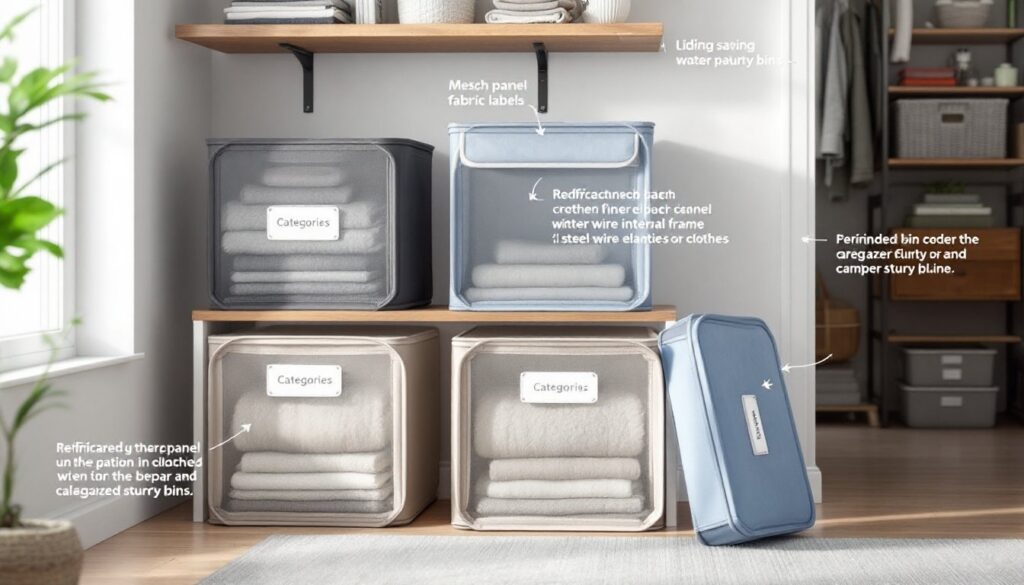
The best collapsible storage bins pair a fabric exterior with an internal frame, usually steel wire or rigid plastic. The fabric should be at least canvas or reinforced polypropylene, dense enough that it won’t thin out or snag easily. Cheaper bins use thin plastic sheeting that feels papery and tears when you catch a corner on a shelf edge.
Check the frame construction too. Steel wire frames resist permanent creasing and hold their shape through dozens of collapse-and-unfold cycles. Plastic frames work fine for lighter loads but can snap at stress points after a year or two of heavy use. The bottom should be reinforced, look for double-stitching or an extra fabric panel, because that’s where weight concentrates when the bin sits on a shelf.
Dimensions matter for real-world use. Standard small bins run roughly 12″ × 8″ × 6″ (width × depth × height) when assembled: medium sizes are closer to 17″ × 12″ × 8″. Measure your storage space first, because a bin that’s theoretically perfect won’t help if it won’t fit through your closet door or under the bed frame.
Lid Design and Sealing Options
Not all lids are created equal. The cheapest bins come with a simple plastic lid that rests on top, functional but not airtight. For better dust protection, look for bins with elastic-edge lids that wrap tightly around the bin’s top, or folding lids that fasten with snaps or magnetic closures. These cost a few dollars more but deliver noticeably tighter sealing.
For long-term storage of moisture-sensitive items, old photographs, important documents, or seasonal fabrics, seek out bins with silicone or rubber gasket seals. These aren’t fully airtight like vacuum bags, but they block out far more dust and moisture than a resting lid. Test the lid fit before buying if possible: it should slide or snap on with light finger pressure, not require wrestling it into place.
Transparency is worth considering too. Opaque bins look sleeker on open shelves, but translucent or mesh-panel lids let you spot contents without opening every box. If you’re storing by category (seasonal clothing in one, holiday decorations in another), transparency speeds up inventory work.
Best Storage Solutions for Every Room in Your Home
Collapsible bins aren’t one-size-fits-all, different rooms have different demands. Here’s how to deploy them strategically.
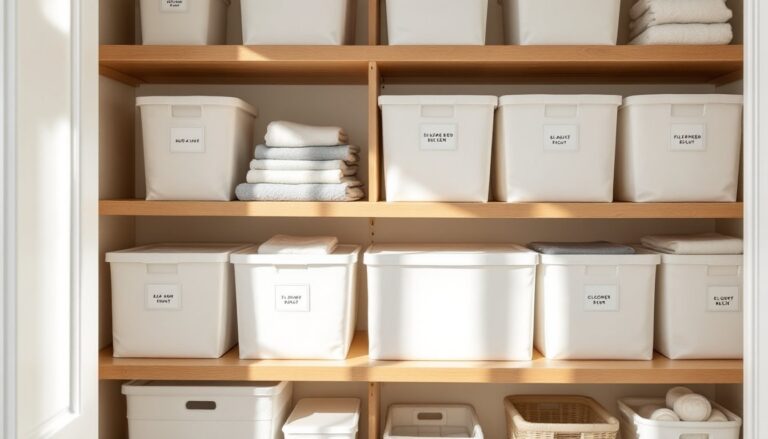
Bedrooms and Closets: Under-bed storage is the obvious play. Measure the clearance from floor to bed frame (usually 6–12 inches), then buy low-profile bins that fit comfortably. Seasonal clothing, summer dresses in winter, heavy sweaters in summer, is the perfect candidate. Label the lid with waterproof tape so you know what’s inside without pulling each bin out. Winter coat storage, off-season shoes, and extra linens all thrive here. Stacking small bins vertically on closet shelves maximizes overhead space, especially in apartments where closet real estate is gold.
Garages: Garages are where most homeowners store the bulk, holiday decorations, old toys, camping gear, sports equipment. Your bins will face temperature swings and humidity, so pick bins with solid fabric exteriors and reinforced lids. Group by category: one bin for Halloween décor, another for Christmas lights and ornaments, a third for pool toys. In unfinished or concrete-floor garages, consider placing bins on wooden pallets or shelving to keep them off damp ground. Organize your storage setup to match the space’s actual conditions, not every garage needs the same approach.
Laundry Rooms and Mudrooms: Bins work brilliantly for sorting donations, storing off-season shoes, or organizing cleaning supplies. A fabric bin is less likely to show dust or rust stains than plastic, and it fits the utilitarian aesthetic better. Label clearly so everyone knows which bin holds what.
Attics: Attics are notoriously hot and can trap moisture in summer. Solid-frame bins with tight lids are essential. Store important documents, wedding dresses, or heirloom textiles in bins with gasket seals. Avoid stacking bins too high, attic joists aren’t always rated for concentrated weight, and leave a foot or two of clearance from rafters to prevent moisture buildup on the container’s top.
Apartments and Tight Spaces: Renters and small-space dwellers can stack collapsible bins vertically on shelving units, under tables, or in a closet’s upper corners. Soft fabric sides won’t damage walls if you accidentally bump them while moving. They’re also easy to pack and move when your lease ends, far simpler than hauling heavy plastic containers down a stairwell.
For inspiration and room-by-room strategies, resources like Martha Stewart’s organization guides and Apartment Therapy’s small-space solutions offer real-world examples of how people use bins to reclaim cluttered spaces. Expert reviews like Real Simple’s roundup of the best collapsible storage bins compare specific models side-by-side, so you can see actual feature differences before deciding.
Conclusion
Collapsible storage bins with lids are a straightforward investment in better organization and reclaimed space. Choose bins with reinforced fabric, solid frames, and tight-fitting lids, match the size to your space, and assign them by room or category. You’ll spend a small amount upfront and gain months or years of clutter-free living. Start with one bin to test the concept, then scale up as your confidence grows.