




Table of Contents
ToggleTruck owners know the struggle: tools get tossed loose, gear slides around on every bump, and valuable equipment either rusts or goes missing. A truck bed side storage box solves that problem by tucking organized, weather-sealed compartments along your truck’s sides. Whether you’re a contractor hauling job-site gear or a weekend warrior carrying camping equipment, these boxes turn wasted space into accessible, protected storage. This guide walks you through what’s available, how to install one correctly, and what it takes to keep it performing well for years.
Key Takeaways
- A truck bed side storage box maximizes unused space along your truck’s sides to keep tools, gear, and equipment organized, protected from weather, and secure from theft.
- Over-wheel storage boxes are ideal for frequent access to smaller items, while underbody and swing-out designs offer a cleaner look and better protection for specialty equipment you use less often.
- Proper installation requires careful positioning, surface preparation, mounting with isolator pads, and medium-strength threadlocker to prevent vibration from loosening bolts over time.
- Inspect bolts every three months in the first year and twice yearly thereafter, and clean your truck bed side storage box quarterly with mild soap to prevent rust and corrosion.
- Maintain weatherstripping annually, lubricate hinges every few months with silicone spray, and ensure proper ventilation during long-term storage to extend the box’s lifespan to 10+ years.
What Are Truck Bed Side Storage Boxes and Why You Need Them
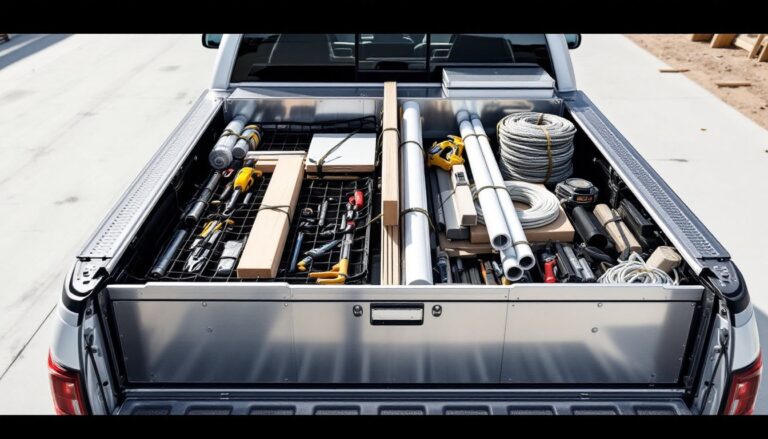
Truck bed side storage boxes are lockable compartments mounted flush against the inside walls of a truck bed, running alongside the frame rails. They’re designed to maximize dead space that would otherwise collect water, dirt, or broken items that roll underneath the bed. Unlike a toolbox at the foot of the bed, side boxes don’t eat into load capacity or make it hard to slide long lumber or sheet goods into the bed. Most come in aluminum or composite construction to resist rust and weather, and they mount directly to the bed rails using brackets or bolts. Many also include internal dividers, padded interiors, or weatherstripping to keep tools organized and protected from moisture and vibration damage.
Types of Truck Bed Side Storage Solutions
Over-Wheel Storage Boxes
Over-wheel storage boxes sit directly over the wheel well, making them one of the most popular choices for both single-cab and crew-cab trucks. These boxes are typically 24 to 36 inches tall and 36 to 48 inches long, though dimensions vary by truck model. Because they sit higher, they’re easier to access and don’t interfere with loading long items from the bed’s sides. They’re ideal if you primarily carry smaller tools, fasteners, or first-aid kits rather than bulky equipment. Most use a combination of bolted or riveted mounting with rubber isolators to dampen vibration and protect the truck’s frame finish.
When choosing an over-wheel box, check your truck’s specific bed width (often around 60 inches on full-size trucks, narrower on mid-size models) to ensure the box doesn’t hang over the side or interfere with your tonneau cover if you use one. Look for models with internal lining and, if you’ll store solvents or chemicals, ventilation holes to prevent pressure buildup.
Underbody and Swing-Out Options
Underbody storage compartments sit lower, tucked under the truck bed itself, usually between the frame rails and closer to the ground. They’re less conspicuous and don’t affect bed height or loading clearance. But, they’re harder to access while standing next to the truck and more prone to collecting road salt and debris. Swing-out designs hinge open from the side, letting you pull out a drawer-like compartment for easier viewing and retrieval. These work well for specialty items like tire repair kits, hydraulic fluid, or spare fuses that you don’t grab often but need when you do. Mounting underbody boxes requires more careful planning to avoid hitting the frame or suspension components, so verify clearances with your truck’s blueprints or the box manufacturer’s fitment data.
How to Install Truck Bed Side Storage on Your Vehicle
Before You Start: Confirm the box is designed for your truck’s year, make, and bed style (side-by-side, steps, ties, etc.). Check that you have a clean, dry workspace and gather all hardware: missing bolts are a common reason installations fail partway through the season.
What You’ll Need:
- Truck bed side storage box (matched to your truck)
- Mounting brackets and bolts (typically 3/8-inch galvanized or stainless steel)
- Wrench or socket set
- Rubber isolator pads or shims
- Tape measure and marking pencil
- Level
- Wire brush or scotch pad (to clean mounting surfaces)
- Threadlocker compound (medium strength, like Loctite Blue)
- Safety glasses and work gloves
Installation Steps:
-
Position the box. Set it in place along the truck bed rail and use a level to confirm it sits square to the ground. Mark bolt hole locations on the frame with a pencil. Ensure the box won’t interfere with door hinges, tie-downs, or existing hardware.
-
Prepare surfaces. Use a wire brush to remove rust, paint chips, or dirt where bolts will seat. Rubber isolator pads under bolt heads prevent the box from transmitting vibration directly to the truck frame.
-
Drill or use existing holes. If your truck has pre-drilled holes (many OEM boxes do), align them carefully. Otherwise, mark pilot holes, double-check alignment, and drill with a 7/16-inch drill bit for a 3/8-inch bolt.
-
Install bolts. Insert bolts with washers and isolator pads. Tighten in a star pattern (alternating sides) to keep the box even against the frame. Snug bolts firmly but don’t over-torque, aim for about 40 foot-pounds on 3/8-inch hardware, or firm hand-tight with a breaker bar.
-
Apply threadlocker. Apply a small drop of medium-strength threadlocker to each bolt before final tightening. This prevents vibration from loosening hardware over time.
-
Test fit. Close and open any lids or drawers several times. Listen and feel for rattles. If the box moves or creaks, tighten bolts slightly more and wait 24 hours for the threadlocker to cure.
Professional Installation: If your truck has an aftermarket bed liner, composite bed cover, or complex tie-down system, consider having a truck shop handle the install. They can verify fitment and avoid drilling into hidden wiring or fuel lines. Budget $200 to $400 in labor depending on your area and complexity.
Maintenance and Care for Long-Lasting Performance
Truck bed side storage boxes endure sun, salt, mud, and constant vibration, so maintenance is worth the effort. After installation, inspect bolts every three months during the first year and then twice yearly afterward. Vibration loosens hardware more than you’d expect, especially in off-road conditions. Simply snug bolts by hand and apply a touch of threadlocker if needed.
Clean your box quarterly with a soft brush and mild soap and water, especially if you drive in coastal areas or use road salt in winter. Avoid pressure washers: high-pressure spray can force water into seams and corrode the interior. Dry thoroughly afterward, and if you notice any small rust spots on aluminum, sand them lightly with fine-grit (220-grit or higher) sandpaper and touch up with clear spray lacquer to prevent spread.
Check weatherstripping and gaskets annually. If they’re compressed, cracked, or no longer seat fully, water will creep in during heavy rain. Most manufacturers offer replacement gasket kits for around $25 to $50. If your box has internal dividers or foam padding, vacuum out dirt and debris every few months to prevent mildew.
For owners who load tools or gear frequently, take a moment after each trip to wipe down any spilled oil or grease and ensure lids close completely. Corrosion often starts at hinges and latch points, so a light coat of silicone spray or paste wax on those areas every few months buys a lot of longevity. If you store the truck long-term (winter storage or seasonal use), crack the box open to let it breathe and prevent moisture buildup inside. Resources like Ana White and Popular Mechanics offer detailed guides on tool storage and vehicle maintenance that complement box care routines.
Conclusion
A truck bed side storage box transforms how you organize and protect tools and gear, reclaiming space that would otherwise go to waste. Choose the type that fits your truck and workflow, over-wheel for frequent access, underbody for a cleaner look, and take time to install it properly with isolator pads and threadlocker. Keep bolts snug, clean out moisture, and lubricate hinges, and your box will deliver reliable service for a decade or more. Your truck will be better organized, and your tools will stay put.