




Table of Contents
ToggleA king bed is a great investment, but it eats up floor space, and when square footage is at a premium, storage beneath that mattress represents real opportunity. King bed frame storage solutions range from built-in drawers and lift-up platforms to DIY upgrades that transform wasted space into functional storage. Whether you’re dealing with a small bedroom, planning a bedroom renovation, or just looking to declutter, a storage-equipped king frame can hold seasonal clothing, extra bedding, or anything else you need close at hand but out of sight. This guide walks through the options, helps you pick the right system, and shows you how to build or maintain one that works for your space and lifestyle.
Key Takeaways
- King bed frame storage solutions range from built-in drawers and lift-up platforms to DIY upgrades, with storage capacity ranging from 200–300 pounds for drawer systems to 70–100 cubic feet for lift-up frames.
- Built-in drawers are the most popular retrofit option, while platform beds offer maximum design flexibility and can accommodate 500–1,000 pounds total when properly constructed with center supports.
- Before choosing a king bed frame storage solution, measure your room clearance (most frames sit 12–18 inches off the floor), consider access frequency, and verify weight capacity for your specific needs.
- A DIY platform bed with drawers costs $300–$800 in materials and can be completed in a weekend using pocket hole joinery, heavy-duty ball-bearing slides, and proper center support beams.
- Maintain your bed frame storage by cleaning drawer slides every 6–12 months, checking fasteners annually for loosening due to seasonal humidity changes, and using clear bins with labels for optimal organization and accessibility.
- King bed frame storage works best when paired with moisture control measures like silica gel packs in humid climates and breathable fabric bags to prevent mildew and pest issues.
Understanding King Bed Frame Storage Options
Built-In Drawers and Under-Bed Solutions
Drawer-equipped king frames are the most popular retrofit option. These typically come with two to six rolling drawers mounted underneath the frame rails or headboard, accessible from the side or foot of the bed. Standard drawer dimensions run around 24 inches deep, 15–18 inches wide, and 8–12 inches tall, giving you roughly 200–300 pounds of storage capacity depending on construction and drawer count.
Under-bed storage bags are a simpler, lower-cost alternative if you don’t want a built-in frame. They slide beneath the frame on the floor and work best for off-season items since access isn’t as convenient. But, they don’t solve the structural integration problem, the mattress and frame sit directly on the bags, which can compress soft goods over time.
Lift-Up and Platform Bed Designs
Lift-up frames use pneumatic or hydraulic springs to hold the mattress platform at a 45–90-degree angle, exposing the entire base for storage. A king lift-up frame typically accommodates 70–100 cubic feet of open storage space underneath. This design works well if you need maximum capacity and don’t mind the extra step of lifting before bed.
Platform beds are a structural alternative: solid slat or board platforms replace the traditional box spring and metal frame, raising the bed 12–18 inches higher and creating usable space for storage boxes, drawers, or shelves underneath. Platform frames are more stable for heavier loads and give you design flexibility, you can add your own drawers, shelves, or casters as needed. They’re also easier to build from scratch than converting an existing frame.
How to Choose the Right King Bed Frame Storage
Start by measuring your room and the space underneath your current bed. Most standard king frames sit 12–18 inches off the floor: if you’re working with less than 12 inches, built-in drawers won’t fit, and you’re limited to under-bed bags or a frame lift.
Next, think about access frequency. If you reach for stored items weekly, drawers or a lift-up frame make sense. If it’s seasonal rotation only, a platform bed with sliding storage boxes is simpler to build and maintain.
Weight capacity matters. Mattresses, linens, and sleepers alone add 150–200 pounds to the frame. If you’re storing books, tools, or heavy items, verify your frame’s rated capacity, most quality king frames hold 500–1,000 pounds total, but cheap frames may max out at 300–400 pounds. Structural reinforcement like center supports or cross-bracing becomes critical if you’re pushing limits.
Consider your budget and DIY skill level. A basic lift-up mechanism kit runs $150–$400 and requires basic carpentry and hardware installation. A custom platform frame with built-in drawers takes a weekend and costs $300–$800 in materials, depending on wood grade and drawer slides. Pre-built storage frames cost $800–$2,500 but ship ready-to-assemble.
Finally, think about aesthetics. Does the frame need to blend with existing decor, or is function your priority? Storage drawers hide clutter, while a platform bed with visible boxes underneath requires tidy organization.
DIY King Bed Frame Storage Projects
Building a Platform Bed Frame with Under-Bed Drawers
A platform bed is the most flexible DIY storage solution. You’ll build a frame from 2×10 or 2×12 lumber (the actual dimension is 1.5 inches thick by 9.25 or 11.25 inches tall) positioned so the mattress sits directly on horizontal support beams. Use 3/4-inch plywood slats spaced 3–4 inches apart across the frame to support the mattress without a box spring.
Materials needed:
- 2×10 or 2×12 pressure-treated or hardwood lumber for frame rails
- 3/4-inch plywood for slats
- 2.5-inch pocket hole screws and pocket hole jig
- Heavy-duty ball-bearing drawer slides (100-pound rated, pair of slides per drawer)
- 1/2-inch plywood for drawer boxes
- 2-inch wood screws and wood glue
- Safety gear: eye protection, work gloves, dust mask
Basic steps:
- Cut frame rails to length (a king frame is 78 inches wide, 80 inches long internally). Assemble the perimeter using pocket holes and glue for a rigid base.
- Add center support beams (2×10s running lengthwise at the 40-inch midpoint) to prevent sagging.
- Install plywood slats perpendicular to the rails, securing with screws and glue.
- Build drawer boxes from 1/2-inch plywood with a 4:1 depth-to-height ratio (example: a 24-inch-deep drawer works with a 6-inch front height). Mount ball-bearing slides to the inside frame rails and drawer sides.
- Finish the platform and drawers with primer and paint, or stain and poly if you prefer natural wood.
Resources like Ana White offer free plans for platform beds, and Fix This Build That provides detailed woodworking tutorials if you need step-by-step guidance.
Installing a Lift-Up Mechanism
If you already have a sturdy king frame and want to add lift-up functionality, you can retrofit it with a commercial kit. These come with pneumatic or hydraulic cylinders rated for the weight of your mattress and contents, typically 100–200 pounds of lift force per side.
Installation overview:
- Measure the inside distance between your frame rails at both the head and foot.
- Mount the cylinder brackets to the frame rails using lag bolts or through-bolts, ensuring they’re perfectly parallel.
- Attach the lift struts to the platform or slats at the correct attachment points (kits provide jigs).
- Test the lift mechanism without the mattress to ensure smooth, even motion.
- Add a safety prop or latch to hold the platform open while you retrieve items.
Make sure the cylinders have adequate clearance, a raised platform needs at least 20 inches of vertical space above the frame. If your bed’s against a wall or under a sloped ceiling, this might not work.
Adding Drawers to an Existing Frame
If you have a platform frame but no drawers, retrofitting them is straightforward. Measure the open space beneath the platform, then build drawer boxes that fit snugly. Use heavy-duty full-extension slides so drawers pull out completely and you can access items at the back without crawling. The Handyman’s Daughter walks through beginner-friendly furniture projects that include drawer installation if you want additional reference.
Test your drawers with weight, load them progressively to confirm they glide smoothly and don’t sag or bind.
Organizing and Maintaining Your Bed Frame Storage
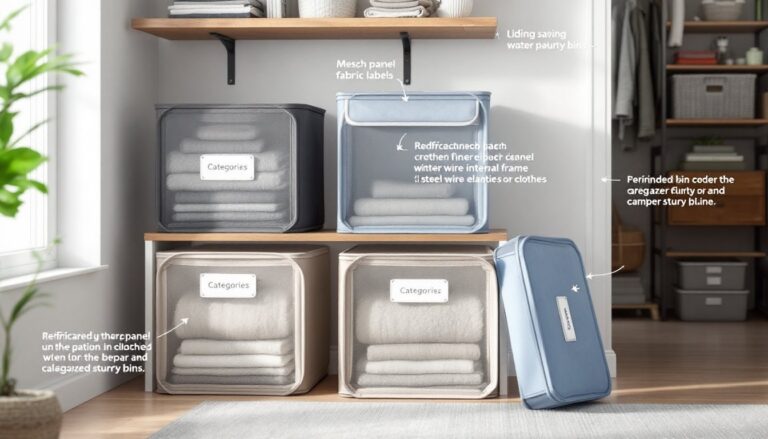
Once your storage is built, organization determines usability. Use clear plastic bins or fabric drawer dividers so you can see what’s stored without opening every drawer. Label everything, seasonal items, extra linens, and off-season clothing should be clearly marked and rotated regularly.
Keep moisture and pests in mind. Bedroom storage is usually dry, but if you live in a humid climate or near a basement, consider silica gel packs or cedar blocks inside bins. Store fabrics in breathable bags, not plastic, to prevent mildew.
Clean drawer slides and mechanisms every 6–12 months. Dust accumulates on ball bearings and can slow smooth operation. Wipe slides with a dry cloth and apply a light machine oil if they feel sluggish. For lift-up mechanisms, check the pneumatic cylinders for leaks, a slow loss of pressure over months is normal, but if your platform drops suddenly, the cylinder may have failed and needs replacement.
Check your frame’s screws and bolts annually, especially if you have a platform bed with drawers. Wood shrinks and swells with seasonal humidity, and fasteners can loosen over time. Tighten everything with an appropriate wrench or driver to prevent creaks and movement.
If you notice sagging under the mattress, your center supports may be undersized or the wood may be splitting. Add a temporary center post (a 4×4 adjustable post jack from a home improvement store costs $50–$100) while you assess whether you need reinforcement or frame replacement.
Conclusion
King bed frame storage transforms an underused space into functional storage, and you have options for every budget and skill level. Whether you build a DIY platform bed with drawers, retrofit a lift-up mechanism, or upgrade with sliding storage boxes, the key is matching the solution to your room, your needs, and your timeline. Start with accurate measurements, invest in quality slides and fasteners, and plan for maintenance. A well-built frame pays dividends in bedroom organization and space efficiency for years to come.