

Table of Contents
ToggleBathroom clutter has a way of piling up fast. Between towels, toiletries, cleaning supplies, and all the small essentials, most bathrooms run out of built-in storage before you know it. A freestanding bathroom storage cabinet solves this problem without the permanence of wall-mounted shelving or recessed medicine cabinets. These versatile units slide into corners, sit beside vanities, or fit under windows, adding both function and design appeal. Unlike built-in solutions, they’re flexible, movable, and don’t demand professional installation. Whether you’re working with a tight powder room or a sprawling master bath, a freestanding cabinet can transform wasted space into organized storage while keeping your design options open.
Key Takeaways
- A freestanding bathroom storage cabinet offers flexible, affordable storage without permanent installation, costing $150–$600 compared to $800–$2,500 for built-in alternatives.
- Measure your bathroom carefully before purchasing—note width, height clearance, and depth—to ensure your cabinet fits without blocking traffic flow or doors.
- Tall cabinets (60–72 inches) maximize vertical space in tight bathrooms, while wide, low units work better as statement pieces under windows or as vanity alternatives.
- Level your freestanding cabinet properly using adjustable feet or shims, and leave 2–3 inches of air gap from moisture sources like shower walls to prevent deterioration.
- Organize the interior with clear bins and drawer dividers, assign zones for different products, and check shelves quarterly for sagging or overloading to maintain functionality.
Why Freestanding Cabinets Are the Perfect Bathroom Storage Solution
Freestanding cabinets win points for flexibility that built-in storage simply can’t match. Need to reconfigure your bathroom layout? Move the cabinet. Renting and can’t install permanent fixtures? A freestanding unit works perfectly. Unlike recessed medicine cabinets that demand wall studs and drywall cuts, freestanding options require zero structural commitment.
They’re also far easier on your wallet than custom built-ins or hiring a contractor to frame and install cabinetry. A quality freestanding cabinet runs anywhere from $150 to $600 depending on size, finish, and materials, compared to $800 to $2,500 for semi-custom built-in work. Assembly is usually straightforward (some units arrive fully assembled), and most bathrooms have enough floor or corner space to accommodate one.
Style-wise, freestanding cabinets let you lean into whatever aesthetic you prefer: farmhouse, contemporary, industrial, or traditional. You can swap it out in a few minutes if your design tastes shift. They also work brilliantly in smaller bathrooms where you need storage but can’t spare wall depth for wall-mounted shelving. A tall, narrow freestanding cabinet fits snugly between the toilet and the wall, or a wider unit can nestle under a window.
Types of Freestanding Bathroom Storage Cabinets to Consider
Tall Cabinets
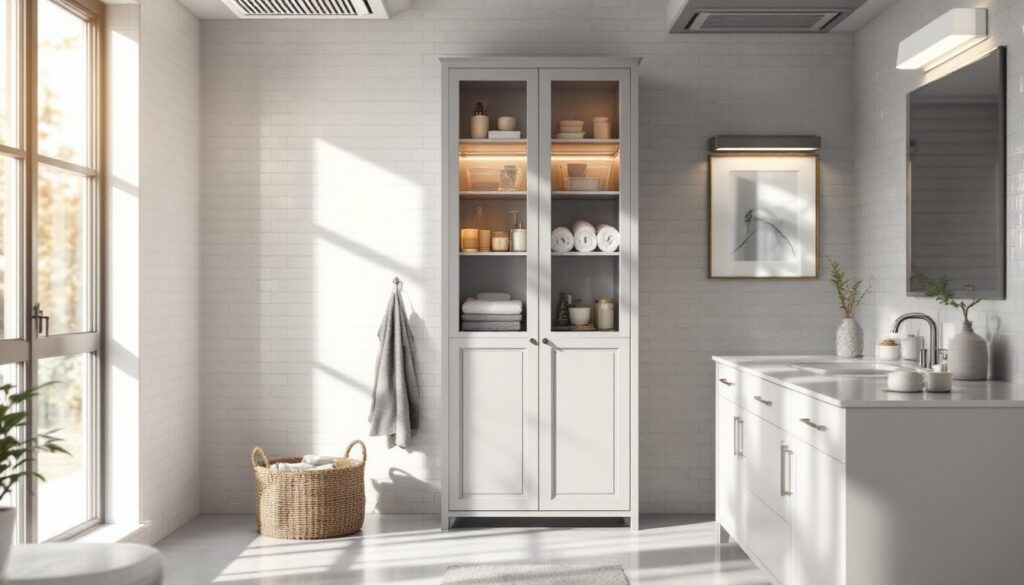
Tall freestanding cabinets, typically 60 to 72 inches high, maximize vertical space and work especially well in bathrooms where floor space is limited. These units usually feature two or three shelves with a door or open design, giving you room for towels, toiletries, and less-frequently-used items on upper shelves. Many tall cabinets include a lower cabinet section for hiding larger bottles or cleaning supplies behind closed doors. A 24-inch-wide tall cabinet is standard and fits neatly beside a vanity or in a corner without feeling oversized. Look for options with adjustable shelves so you can customize spacing for different item heights.
Wide, low cabinets (36 to 48 inches wide and 30 to 36 inches tall) work well as alternative vanities or as statements pieces under a window. These sit at a more comfortable reach height and feel less imposing in smaller bathrooms. Mid-range cabinets (typically 24 inches wide and 30 inches tall) offer a happy medium: enough storage without eating up too much floor real estate.
Open shelving cabinets (no doors) display décor items and rolled towels beautifully but expose everything inside, use them only if you’re willing to keep contents tidy and dust-free. Closed-door cabinets hide clutter and dust, making them more practical for storing everyday supplies. Some hybrid designs feature a mix of open shelves and closed doors, letting you show off pretty items while hiding functional storage.
Choosing the Right Size and Style for Your Bathroom
Before shopping, measure your bathroom carefully. Note the width of the space where you plan to place the cabinet, its height clearance to the ceiling or light fixtures, and the depth you can spare from the wall. A standard 12 to 15-inch depth works for most bathrooms without interfering with doors or walkways. Write these numbers down, it’s easy to misjudge sight lines when standing in a bathroom, and the wrong dimensions cause regret at checkout.
Consider traffic flow. If your bathroom is tight, a tall, narrow cabinet tucked into a corner works better than a wide unit blocking the center. If you have space under a window, a wider cabinet positioned there becomes a design feature rather than an obstacle.
Material choices matter for durability and style. Solid wood cabinets (oak, pine, or engineered hardwoods) bring warmth and age well with care. Laminate finishes are budget-friendly and moisture-resistant, ideal for humid bathrooms. Metal-framed designs with glass or mesh shelving suit industrial or contemporary spaces. White or light gray finishes brighten small bathrooms: darker wood tones add richness to larger spaces.
Resources like Remodelista and Ana White offer inspiration for cabinet styles and occasionally feature free DIY plans if you’re inclined to build one yourself. For pre-made options, a 24-inch-wide cabinet in grey offers a compact, neutral choice that works in most bathrooms.
Installation and Placement Tips for Maximum Functionality
Most freestanding cabinets arrive flat-packed or partially assembled. Check the box contents against the instruction sheet before you start. You’ll typically need a screwdriver, and some units require basic bolting of shelves or assembly of a frame. Lay out parts in a clear space and work methodically, don’t skip steps or force parts together, which can strip fasteners.
Unpacking on your bathroom floor is risky: assemble in another room if possible, then move the unit into place. If assembly must happen in the bathroom, protect the floor with a drop cloth to prevent scratches.
For placement, level is critical. A wobbly cabinet feels unsafe and can shift contents off shelves. Use a 2-foot level along the top front edge, then check side-to-side. Most cabinets have adjustable feet or shims: tweak them until the cabinet sits flat and doesn’t rock. If your bathroom floor slopes slightly, common in older homes, shim under the feet rather than forcing the cabinet against an uneven wall.
Avoid placing heavy cabinets directly against moisture sources like shower walls. Bathrooms are humid, and while most cabinets are treated for moisture, prolonged contact with wet walls speeds decay. Leave at least 2 to 3 inches of air gap if possible, and ensure the bathroom is well-ventilated with an exhaust fan running during and for 30 minutes after showers.
Anchoring to the wall is optional but smart in homes with children or pets, or in earthquake-prone regions. Use 2.5-inch wood screws into wall studs through the rear frame of the cabinet (you’ll need to locate studs with a stud finder). This prevents tipping without requiring wall damage if you later move the cabinet.
Maintenance and Organization Best Practices
Wipe down the cabinet exterior monthly with a soft, damp cloth to keep dust at bay. Avoid harsh chemical cleaners that strip finishes: instead, use a mild soap-and-water solution or wood-specific cleaner if your cabinet is solid wood. Dry thoroughly to prevent water spots and warping.
Inside, use bins and drawer dividers to maximize organization. Clear plastic containers let you see contents without opening the cabinet, and they keep bottles from rolling around. Assign zones: hair care products on one shelf, medications in a labeled basket on another, cleaning supplies in a bin at the bottom. Group similar items together so you’re not hunting through three shelves for your deodorant.
Bathroomcabinets trap humidity, especially below-sink areas. If moisture develops inside, improve bathroom ventilation by running your exhaust fan longer during and after showers, or crack a window. Wipe interior surfaces dry periodically, and store medications and paper items away from the lowest shelves where moisture collects. Never store cleaning chemicals alongside personal care items, fumes can contaminate products and create safety hazards.
Check shelves quarterly for sagging or loose fasteners, especially if you’ve loaded them heavily. Most cabinets are designed for moderate use: avoid overloading shelves beyond their weight capacity (usually 25 to 50 pounds per shelf depending on construction). Rotate seasonal items, move lighter summer sunscreen above and heavier winter lotions below, to keep weight balanced and access intuitive.
Conclusion
A freestanding bathroom storage cabinet delivers practical storage without the commitment of permanent installation, making it an ideal choice for renters and owners alike. By selecting the right size, style, and placement for your space, and maintaining it properly, you’ll enjoy years of organized bathroom bliss. Take time upfront to measure, level, and plan, and your cabinet will serve you well.