

Table of Contents
ToggleAn entryway sets the tone for your entire home, and a cluttered one sends the wrong message from the moment guests walk through the door. Entryway storage benches solve that problem by combining seating, shoe storage, and a place for coats and bags into one functional piece. Whether you’re tight on space or just tired of tripping over clutter, a well-chosen storage bench transforms your entry from chaotic to organized. This guide covers the styles, sizes, and options (DIY or ready-made) to help you pick the right fit for your home and budget.
Key Takeaways
- Entryway storage benches combine seating, shoe storage, and a place for coats and bags into one functional piece, transforming a cluttered entry into an organized space.
- Entryway storage benches come in multiple styles—from minimalist and mid-century modern to rustic and farmhouse—making it easy to match your existing home décor.
- Standard entryway storage benches range from 36 to 72 inches wide; measure your entry and leave at least 12 to 18 inches of walkway clearance to avoid creating a trip hazard.
- Store-bought benches cost $150 to $1,200+ with faster setup, while DIY projects run $200 to $600 in materials and 16 to 30 hours of labor with greater customization options.
- The best entryway storage benches combine open cubbies for frequently-used items with closed storage, wall-mounted shelves, and labeled organizers to maximize accessibility and function.
- Monthly maintenance—purging items, wiping surfaces, and reorganizing bins—keeps your entryway storage bench system working efficiently and prevents clutter from returning.
Why Entryway Storage Benches Are a Game-Changer for Home Organization
Key Benefits and Uses
An entryway storage bench does heavy lifting in a compact footprint. You get a place to sit while removing shoes or putting on a coat, hidden storage under the seat for shoes or seasonal gear, and often shelves or cubbies for bags, hats, and keys. Unlike a standard bench or coat rack, a storage bench consolidates three separate pieces into one.
The beauty is how it redirects traffic patterns. Instead of dropping items on a side table or floor, family members and guests know exactly where things go. Kids instinctively toss shoes in the lower cubbies, adults set bags on the seat, and coats hang nearby. It’s behavioral design disguised as furniture.
Storage benches work in apartments, townhouses, and large homes. A compact 36-inch model fits a narrow apartment entry: a 60-inch bench with cubbies dominates a larger foyer. They’re equally at home in a mudroom, living room, or bedroom closet, making them one of the most flexible storage solutions for a home.
Popular Styles to Match Your Home Décor
Entryway storage benches come in styles ranging from Scandinavian minimalism to farmhouse rustic to mid-century modern, so you can match your existing décor rather than starting from scratch.
Minimalist benches feature clean lines, neutral finishes (white, gray, natural wood), and open shelving or slim cubbies. These work well in contemporary or smaller entries where visual clutter is the enemy. A simple recessed toe-kick (a small indent at the base) keeps the look sleek.
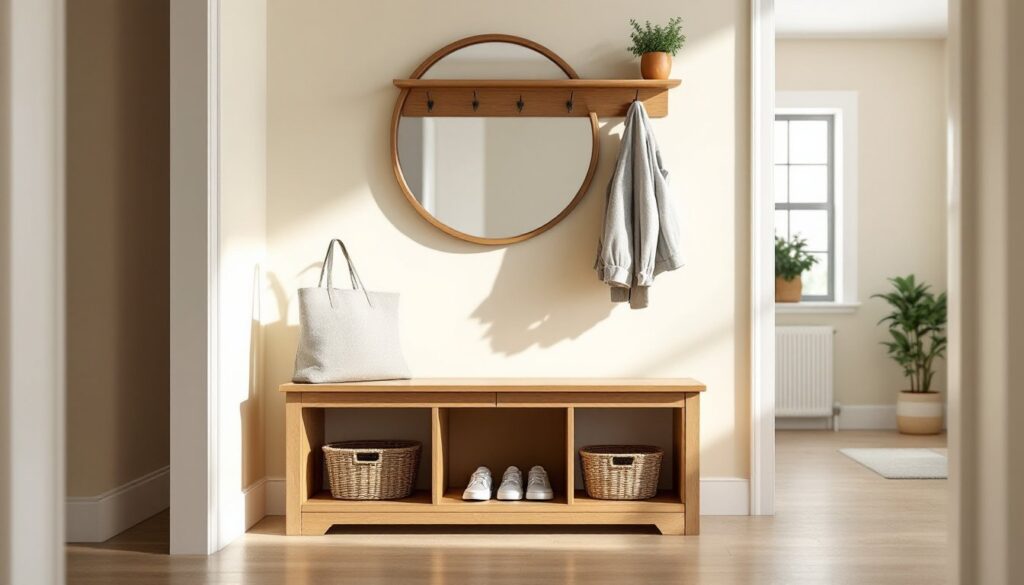
Rustic and farmhouse styles use heavier wood, wider planks, and sometimes a distressed finish. Bench seats are typically deeper, and you’ll see open shelves, woven baskets for storage, and maybe a decorative mirror or hooks above. These benches anchor a lived-in, cozy entry.
Mid-century pieces balance style and storage with tapered legs, maybe a padded cushion, and compartments that blend wood and metal accents. They’re sculptural without being fussy.
Beyond wood, you’ll find benches with upholstered seats, metal frames, or painted finishes. A linen or wool seat cushion adds comfort, while a laminate or veneer top resists dings from boots and bags better than stain-finished solid wood. Choose material based on your entry’s traffic, high-traffic areas benefit from durable finishes, while lightly-used entries can showcase nicer wood tones.
Choosing the Right Size and Placement for Your Entryway
Size matters more than most people think. A bench that’s too small wastes the opportunity: too large, and it blocks your entry and becomes a trip hazard.
Measure your entry width and depth before shopping. Standard entryway benches range from 36 to 72 inches wide. A 36-inch model suits narrow hallways or apartments: 48 to 60 inches works for most standard entries: 72+ inches fills a large foyer. Depth varies from 14 to 20 inches, so leave at least 12 to 18 inches of walkway in front and behind the bench.
Place the bench along the longest blank wall, perpendicular to the main walking path. If your entry has a coat closet on one side, position the bench opposite so traffic flows naturally. If there’s a mirror or hooks above the bench, ensure they’re at comfortable viewing and reaching heights, roughly 60 to 72 inches from the floor.
Consider what lives above and beside the bench. Narrow entries benefit from wall-mounted shelves or pegboard above to avoid floor clutter. Wider entries can handle a larger bench with cabinets below and open shelves or a mirror above. Take a photo of your entry with a measuring tape, and overlay some bench options before committing.
DIY vs. Store-Bought: What Works Best for Your Budget
Store-bought benches range from $150 to $1,200+, depending on materials and finish. Budget options (under $300) often use particle board or engineered wood with laminate tops, perfectly serviceable but prone to wobbling if assembly is rushed. Mid-range benches ($400–$800) use solid wood or quality veneer, offer better joinery, and include features like drawers and cubbies. High-end pieces ($900+) showcase premium hardwoods, heirloom finishes, and meticulous craftsmanship.
The advantage of store-bought is speed and warranty. You unbox, assemble (or pay for assembly), and it’s done. No tool investment, no mistakes. The downside is limited customization, you’re choosing from what’s in stock.
DIY benches cost $200 to $600 in materials and require woodworking tools (miter saw, drill, brad nailer, sander) and 16 to 30 hours of labor. Free woodworking plans are available online, including options like those featuring entryway benches with storage shelves and hooks. If you already own tools and enjoy building, DIY is rewarding and lets you customize dimensions, wood species, and finish.
DIY isn’t ideal if this is your first major project. A poorly constructed bench will sag, squeak, and disappoint. If you’re committed to building, start with simple designs (no dowels, pocket holes only) and practice on a smaller piece first. Resources like Fix This Build That offer step-by-step tutorials that walk you through the process clearly. Honest about skill level: if you’re handy but new to furniture, choose a straightforward design and expect a learning curve.
Maximizing Storage and Functionality
A bench is only as useful as its storage is accessible. The best benches combine open and closed storage. Open cubbies (roughly 10×10 inches each) work for frequently-used items, shoes, bags, keys. Closed cabinets or drawers hide clutter, mail, scarves, gloves. A lift-top seat (hinged at the back) adds hidden volume under the cushion.
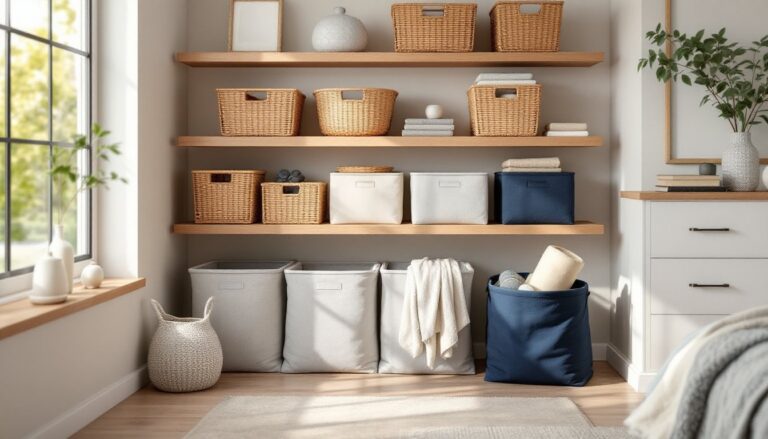
Organizers matter. Woven baskets or wooden bins slide into cubbies and contain small items, mittens, sunscreen, pet leashes. Hooks mounted on the sides or back of the bench hold hats, scarves, and bags without eating shelf space. A towel rod or rail installed inside the bench frame creates a coat rail. Label bins so family members know where to find (and return) items.
Think vertically, too. Wall space above the bench is prime real estate. A wall-mounted shelf at 60 inches handles decorative baskets or a mirror. A pegboard section lets you hang hooks and organize small tools or keys. The Handyman’s Daughter covers DIY wall organization projects that pair beautifully with a bench setup.
Finally, maintain the space. A bench only works if people use it. Once a month, purge items that don’t belong, wipe surfaces, and reorganize bins. A cluttered, chaotic bench beats a completely empty entry, but a thoughtfully organized one keeps your home running smoothly.
Conclusion
An entryway storage bench is one of the highest-return investments for home organization and daily function. Whether you build or buy, choose a size and style that matches your entry’s dimensions and your home’s aesthetic. The best bench is the one you’ll actually use, so be honest about your space, skill level, and budget before deciding. Start simple, stay practical, and enjoy a clutter-free entry that sets the right tone from day one.