




Table of Contents
ToggleIf you own a pickup truck, you know the frustration: loose tools bounce around, cargo shifts during transport, and organized storage feels impossible. A decked truck bed storage system solves this problem by turning your truck bed into a protected, organized workspace. Whether you haul equipment, camping gear, or everyday supplies, a decked system keeps everything secure, accessible, and shielded from weather. This guide walks you through what these systems are, how they work, and whether one’s right for your truck.
Key Takeaways
- A decked truck bed storage system maximizes organization and weather protection by replacing your open bed with sealed, ball-bearing drawer slides that keep tools and gear accessible at waist level.
- Decked truck bed storage systems are bolt-on, DIY-installable kits that require no welding or permanent modifications, taking 2–4 hours to install with basic hand tools and precision alignment.
- Weather seals and drainage channels protect your truck bed from rust while keeping tools dry through storms, with minimal maintenance beyond yearly gasket inspections.
- A decked system costs $2,000–$4,000 but delivers superior accessibility and security compared to toolboxes, tonneau covers, or roof racks, making it ideal for contractors and serious DIYers.
- Verify your truck’s GVWR before installation to ensure a fully loaded decked system (400–600 pounds) doesn’t exceed payload capacity when combined with passengers.
What Is a Decked Truck Bed Storage System?
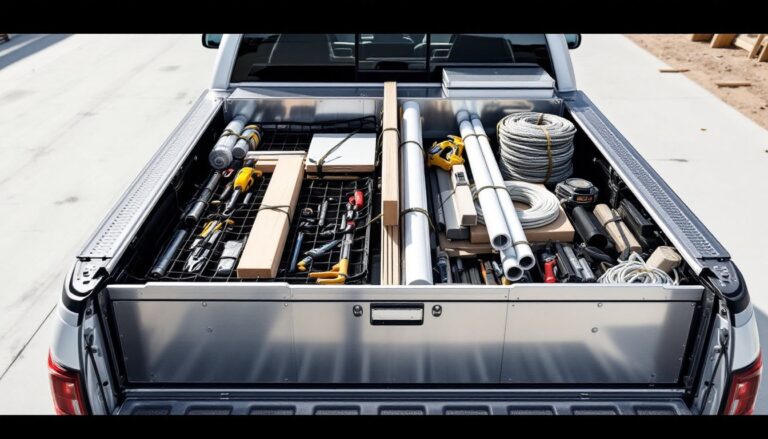
A decked truck bed storage system is a modular, weatherproof drawer system that fits into your truck bed frame, replacing the open bed with secured, accessible storage. The system sits on a metal subframe that bolts directly to your truck bed, and heavy-duty drawers slide out smoothly on ball-bearing slides. The drawers are sealed to keep out rain, dust, and debris, critical if you’re storing tools, electronics, or materials sensitive to moisture.
Unlike a traditional lockable toolbox that sits in the bed (taking up space), a decked system spans the truck bed width and depth, maximizing usable volume. Most systems are designed to handle 50-75 pounds per drawer and accommodate trucks from compact single-cabs to full-size crew cabs. The decking itself is typically made from aluminum or marine-grade plastic, which resists corrosion and keeps weight reasonable, important since you’re adding it to your truck’s payload.
These aren’t custom fabrications. Most decked systems are bolt-on products that you can install yourself in a few hours with basic hand tools. They come as a complete kit with all necessary hardware, making them practical for DIY installation without cutting, welding, or permanent vehicle modification.
Key Features and Benefits for DIY Enthusiasts
Drawer Functionality and Easy Access
The drawer design is where decked systems shine for DIYers. Instead of digging through a open bed or retrieving items from a roof rack, you pull a drawer out to waist level and grab what you need. The drawers often include adjustable dividers or compartments, letting you organize fasteners, drill bits, paint cans, or camp gear by category. No more hunting for a missing bolt while the jobsite clock ticks.
Drawer slides use ball-bearing mechanisms (the same technology in quality kitchen cabinets) that allow smooth, quiet operation even when fully loaded. Some systems feature soft-close or dampening hardware, so drawers won’t slam during bumpy roads. The drawers pull out fully or partway, and most systems have safety stops to prevent over-extension or accidental ejection while driving.
Access is truly the game-changer here. A roofer can store shingles, flashing, and tools in organized drawers rather than piling them loose: a contractor can keep fasteners sorted and inventory visible at a glance: a camper can pack sleeping gear, cooking supplies, and emergency kits in locked drawers separate from tools.
Weather Protection and Durability
Most decked systems feature weatherseals around drawer perimeters (usually EPDM rubber gaskets) that create a seal as the drawer closes. This keeps rain and road spray out. The subframe also includes drainage channels that funnel water away from your truck bed floor, critical since sitting water causes rust and rot.
The drawer shells and lids are typically made from impact-resistant plastic or powder-coated aluminum, materials that withstand UV exposure, salt spray (if you live near coasts or in snow regions), and temperature extremes. A properly sealed system keeps tools dry through a thunderstorm and protects paint supplies from freezing if you’re working in winter. Your truck bed itself benefits too, stored directly on your bed’s surface, these systems reduce rust by keeping moisture-prone tools off the bare metal.
Durability is tied to maintenance. Most systems require minimal upkeep beyond occasional cleaning, but gaskets should be inspected yearly for cracks, and drainage channels should be cleared of debris. If you use your truck in harsh conditions (construction sites with sand, coastal environments, or extreme temperature swings), budget for occasional seal replacement, typically a $50-150 consumable every few years.
Installation Basics and Considerations
Installation is straightforward but requires precision. A decked system bolts to your truck bed using existing bed mounting points (typically the bolt holes along the bed rails). You’ll need a socket set, wrenches, and a level to ensure the subframe sits perfectly flat, even slight tilts cause drawer binding.
Here’s the process: First, measure your truck bed opening and confirm compatibility with your truck model (systems vary for single-cab, double-cab, and crew cab lengths). Next, remove any bed liner or protective coating from the areas where the subframe bolts contact the bed. Clean the surface thoroughly to remove dirt and rust, this ensures solid contact and prevents moisture traps.
Position the subframe, align it with your truck’s bed rails, and hand-thread bolts before fully tightening. Use a spirit level along the frame edges to ensure it’s square and level in all directions. Over-tightening bolts can warp aluminum frames, so tighten in a crisscross pattern (like changing a tire) and use a torque wrench if your kit specifies torque values.
Slide drawers in and out during installation to confirm smooth operation. If a drawer binds, the frame may be slightly twisted, shim it with thin metal shims under the subframe until operation is smooth. The entire installation typically takes 2-4 hours for one person, though a helper makes alignment easier.
One critical consideration: payload capacity. A fully loaded decked system can weigh 400-600 pounds. Check your truck’s GVWR (Gross Vehicle Weight Rating) to ensure you’re not exceeding capacity when the system is loaded plus you and passengers are in the cab. Most modern trucks handle this without issue, but older or lighter-duty models might need you to monitor what you’re carrying. Experts at Bob Vila and other home improvement guides emphasize checking your owner’s manual before installation.
Comparing Storage Solutions for Your Truck
A decked system isn’t your only option, so comparing alternatives helps clarify whether it’s worth the investment. Bed toolboxes (typically $200-500) bolt to the side rail and offer security but sacrifice bed space and accessibility. Tonneau covers (fabric or rigid, $300-1,200) protect whatever’s underneath but don’t organize it. Roof racks ($150-400) work for lightweight gear but are awkward to access and can affect aerodynamics and fuel economy.
Vertical tool organizers that hang on the sides of a bed are low-cost ($50-150) but can block side-to-side access and don’t seal against weather. Rolling tool chests or mobile storage units parked in the bed are portable and affordable but clutter the bed and shift during transit unless secured.
A decked system costs more, typically $2,000-$4,000 depending on truck size and brand, but delivers unmatched accessibility, security (lockable drawers), weather protection, and organization. For homeowners doing frequent home improvement projects, contractors storing tools daily, or outdoors enthusiasts who want gear organized and protected, the cost-per-use often justifies the investment. Casual DIYers or those with minimal storage needs might stick with a basic toolbox.
Research shows that professionals view the best truck bed organizers as essential equipment. A decked system earns that status because it transforms your truck from a generic cargo carrier into a mobile workshop.
Conclusion
A decked truck bed storage system transforms how you transport, organize, and access tools and materials. It protects valuable equipment from weather, keeps your truck bed organized, and speeds up every jobsite or project. Installation is DIY-friendly, maintenance is minimal, and the durability justifies the upfront cost for anyone serious about truck-based work or hobbies. If you’re hauling tools or gear regularly, measure your truck bed, compare systems, and commit to precision installation, your next project will run smoother with everything organized and protected.