

Table of Contents
ToggleCorner kitchen cabinets are notorious for collecting dead space, that awkward gap where measuring tapes go to disappear and mixing bowls become archaeological artifacts. Most homeowners install cabinets and accept this waste as inevitable. But the right corner kitchen cabinet storage solutions can reclaim dozens of usable cubic feet, keep your most-used items accessible, and transform a frustration into functional real estate. Whether you’re working with existing cabinetry or planning a renovation, the seven strategies below tackle the problem from every angle, from simple rotating shelves to custom pull-out systems.
Key Takeaways
- Corner kitchen cabinet storage solutions like lazy Susans and pull-out drawers can reclaim dozens of usable cubic feet that would otherwise go to waste in dead zones.
- Lazy Susan carousels are the most affordable retrofit option ($30–$100) and work best for lightweight items like spices and canned goods, though they have a 50–75 pound weight limit.
- Pull-out drawer and basket systems provide the most dramatic access improvement, support heavier loads (up to 100 pounds), and feel intuitive compared to other corner cabinet storage methods.
- Blind corner swing-out organizers automatically bring items into view when you open the cabinet door, making them ideal for spices, oils, and condiments despite their lower weight capacity.
- Precise measurements and pre-drilling are essential DIY installation steps that prevent cracking and ensure corner cabinet hardware operates smoothly and safely.
- Combining multiple corner storage strategies—such as pairing vertical shelving with stackable bins—maximizes organization while remaining flexible and cost-effective.
Why Corner Cabinets Are Often Underutilized
The problem starts with geometry. Base corner cabinets, typically 36 inches deep and 36 inches wide on each side, contain a dead zone running diagonally from the front corner backward. The cabinet door swings open only 90 degrees, leaving the rear 12 to 18 inches unreachable without contorting your arm or pulling everything out first.
Upper cabinets are worse. At eye level and beyond, that shadowy corner becomes a forgotten shelf where dusty serving platters live untouched for years. Standard fixed shelving wastes this space because items get shoved in and rarely retrieved. Adding insult to injury, cabinet manufacturers historically designed corners as simple boxes with minimal hardware investment, treating the space as a necessary evil rather than an opportunity.
The good news: modern hardware and DIY-friendly retrofit systems now make corner storage practical and affordable. You’re not stuck with wasted space anymore.
Lazy Susan and Rotating Shelf Solutions
A lazy Susan carousel is the simplest retrofit for dead corner space. These rotating shelves mount to the cabinet bottom or interior wall and spin 360 degrees, bringing items from the back into reach without moving the cabinet door.
Installation basics: Measure your cabinet depth and width (accounting for door swing), then select a carousel sized to fit, typically 28 to 36 inches in diameter for base cabinets. Mark mounting holes on the floor or cleats inside the cabinet using the manufacturer’s template. Pre-drill holes with a ¼-inch drill bit to avoid splitting wood, then secure with provided hardware (usually galvanized bolts or screws).
For upper cabinets, mount the lazy Susan to a fixed shelf using a bracket kit designed for the height. Test rotation before loading: the unit should spin freely without binding.
Pros: Affordable ($30–$100 installed), no tools beyond a drill, works with existing cabinets. Cons: Limited weight capacity (typically 50–75 pounds per unit), can feel cramped if items stack high, and rotation takes deliberate hand movement rather than intuitive access. Best for: Spices, canned goods, small appliances, and lightweight pantry items. Heavier cookware stresses the bearings.
Pull-Out Drawers and Sliding Baskets
Pull-out drawer and basket systems use full-extension ball-bearing slides to convert wasted corner depth into accessible storage. Unlike fixed shelves, these slides extend fully, revealing items at the back without reaching or ducking.
How they work: A metal frame mounts to the cabinet interior sides using pre-drilled holes. Baskets or drawer boxes clip into the frame and glide out on ball-bearing slides rated for 50–100 pounds depending on size and grade.
Installation steps:
- Remove the cabinet door if working in a tight corner.
- Measure the interior width and depth (subtract ¼ inch for clearance).
- Mount the left and right slide rails flush with the interior walls, typically 1 inch from the top and bottom.
- Install the pull-out basket or drawer assembly and test the full-extension mechanism.
- Reinstall the door and adjust hinges if necessary.
Most systems require only a cordless drill and a level. Avoid over-tightening screws: this can bow the cabinet sides and bind the slides.
Pros: Dramatically improves access, supports heavier loads than lazy Susans (up to 100 pounds per unit), and feels intuitive. Cons: More expensive ($80–$250 per unit), requires cabinet modification, and installation varies by brand. Best for: Pots, pans, baking sheets, and heavier pantry items that need frequent access.
Blind Corner Organizers and Swing-Out Systems
A blind corner, where two cabinet runs meet at 90 degrees and the corner cabinet door opens at an angle, poses unique challenges. Swing-out organizers solve this by mounting on the inside of the door and swinging out as you open it, bringing stored items into view automatically.
Types available:
- Door-mounted swing shelves: Shelving units bolted to the cabinet door that swing 180 degrees. These work best for lightweight items like spices, condiments, or kitchen linens.
- Bifold or carousel corner units: Hinged shelving that swings and rotates. More expensive but elegant for upper cabinets.
- Tall organizers: Vertical pivot units that fill the corner from floor to shelf, useful in base cabinets with limited depth.
Installation: Measure the door thickness and interior clearance before ordering. Most units mount with 3–4 bolts through the door interior face. Use a ¾-inch spade bit to drill holes (carefully, to avoid splitting veneer), then bolt the mechanism from inside. Test the swing angle to ensure nothing interferes with the adjacent cabinet.
Pros: Automatic access without rotating or pulling, items come into view when the door opens. Elegant appearance. Cons: Limited weight capacity (typically under 30 pounds), requires door modification, and swing arc must clear adjacent cabinets. Professional installation recommended for upper cabinets.
Best for: Spices, oils, condiments, or decorative items that benefit from visibility.
Vertical Shelving and Stackable Storage
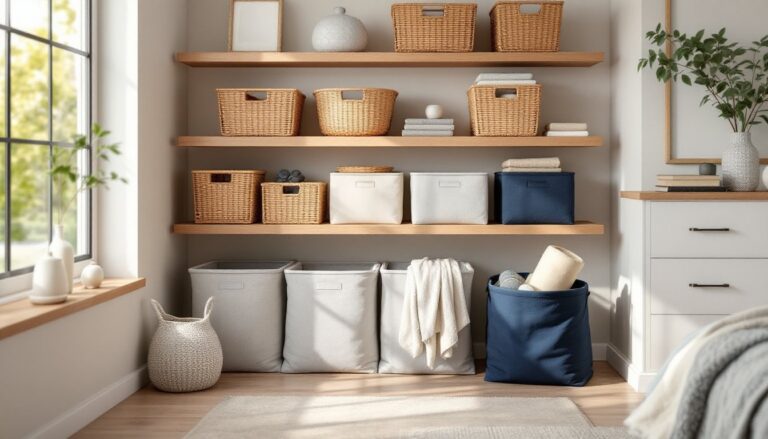
Simple doesn’t mean ineffective. Adding extra fixed shelves or installing stackable bins transforms a deep corner into tiered, organized storage. This approach works especially well in pantry-style cabinets where items sit static.
Adding shelves: Remove the cabinet floor or existing shelves. Use a shelf pin kit (¼-inch hardwood pins or metal pins) to support new shelves at custom heights. Space pins every 16 inches along the cabinet sides. Shelves can be made from ¾-inch plywood, 1×8 lumber, or custom-cut particleboard. Sand and finish edges to match your cabinet interior.
Stackable alternatives: Invest in modular bins, tiered shelf organizers, or bamboo stackable trays designed to maximize vertical space. These cost $15–$50 per unit and require no installation, just stack and adjust.
Smart stacking rules:
- Heaviest items on the lowest shelf.
- Leave 1 inch of clearance between stack height and shelf above.
- Use clear bins so contents are visible without removing them.
- Label bins on the front and side for quick identification.
Pros: Affordable, no special hardware needed, flexible height adjustment, and easy to customize. Cons: Requires manual stacking and careful loading to avoid tipping, and doesn’t solve the reach problem in deep corners without pull-out support. Best for: Canned goods, jars, small appliances, baking supplies, and items stored by category.
DIY Installation Tips for Your Kitchen
Before buying hardware, take precise measurements. Most corner cabinet doors swing 90 degrees: measure from the hinge edge to the far corner of the opening. Note the cabinet depth (typically 12 inches for uppers, 24 inches for base units) and any internal obstructions like pipes or electrical conduit.
Material acclimation matters. If installing wood-based shelves, let them sit in your kitchen for 48 hours before installation. Wood expands and contracts with humidity: premature installation can cause binding or gaps.
Invest in half-inch drill bits and countersink bits for cabinet hardware. Pre-drilling prevents cracking cabinet bottoms and sides, especially in thinner particleboard. Use galvanized or stainless steel hardware in corners to resist corrosion from moisture.
Safety first: Wear safety goggles when drilling overhead in upper cabinets: wear dust masks if cutting wood or particleboard. Corner work is cramped: ensure the cabinet is fully supported and won’t tip. If modifying cabinet doors or structural elements, consult building codes, some jurisdictions require permits for cabinet modifications as part of kitchen renovations.
Finishing touches: Seal any exposed raw wood edges with polyurethane or edge banding to prevent water damage and warping. Apply anti-slip liner to shelves holding heavy items: it prevents sliding and protects finishes.
Test everything before loading items. Spin lazy Susans, slide pull-out drawers, and check swing-out systems multiple times to confirm smooth operation and safe clearances. Load gradually, don’t max out weight capacity on the first try. The kitchen sees high humidity: check hardware tightness every six months and tighten any loose bolts.
When in doubt about structural modifications, call a cabinet maker or licensed contractor. A $200 consultation beats an $800 repair.
Conclusion
Corner kitchen cabinet storage doesn’t have to remain a frustration. Whether you start with a budget-friendly lazy Susan, invest in pull-out drawers, or combine multiple systems, the right hardware and a few hours of measured work unlock hidden square footage and transform daily kitchen access. Resources like IKEA Hackers showcase affordable retrofit ideas, while The Kitchn offers kitchen organization strategies worth exploring. Take your time with measurement and installation, prioritize safety, and remember: the best storage system is one you’ll actually use.