


Table of Contents
ToggleA bed bench with storage is exactly what it sounds like: a low seat or bench positioned at the foot of your bed that doubles as a storage solution. Unlike a simple decorative bench, these pieces combine functional seating with hidden compartments, drawers, or open shelving underneath, making them ideal for bedrooms where square footage is at a premium. Whether you’re furnishing a cozy guest room, a small master bedroom, or a child’s space, a bed bench with storage tackles the universal problem of not having enough room to stash seasonal bedding, extra pillows, shoes, or gear. It’s both a design element and a practical workhorse, which is why homeowners and renters alike are turning to them as a smart furniture investment.
Key Takeaways
- A bed bench with storage maximizes space efficiency by transforming wasted floor area at the foot of your bed into functional seating and hidden compartments for blankets, pillows, and seasonal items.
- Bed benches with storage typically measure 48–60 inches wide and 16–18 inches tall, with storage options ranging from hinged lift-tops and pull-out drawers to open shelving, costing anywhere from $200 for ready-to-assemble units to $1,500+ for solid hardwood pieces.
- Design styles for bed benches range from contemporary and mid-century modern with tapered legs and clean lines to rustic and farmhouse styles featuring distressed wood and visible hardware, allowing you to match your bedroom aesthetic.
- When choosing a bed bench with storage, measure your bed width and available floor space, prioritize storage capacity based on your needs, and select durable materials like solid wood with mortise-and-tenon joinery for heavy use.
- DIY building a bed bench with storage is an achievable intermediate woodworking project using basic tools and simple box-frame construction with lift-top lids and drawers, though safety precautions like proper clamps and help for moving are essential.
What Are Bed Benches With Storage?
A bed bench with storage sits at the foot of a bed and combines seating with hidden or visible storage space. Most designs measure between 48 and 60 inches wide to align with standard bed widths, twin through queen sizes. The bench seat itself is usually 16 to 18 inches tall, making it comfortable to sit on while putting on shoes or folding laundry.
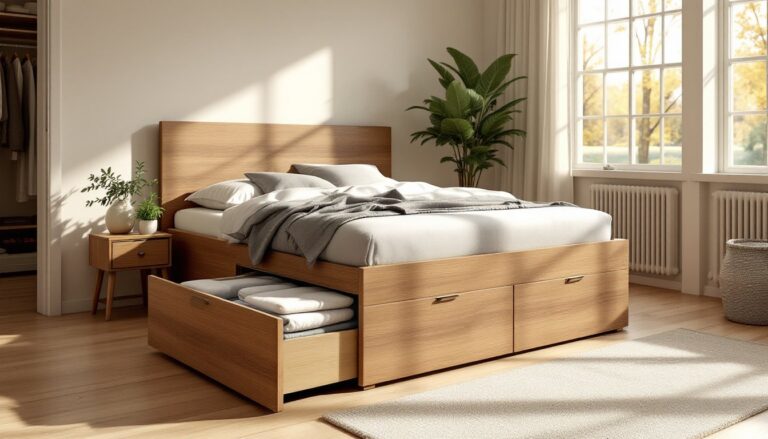
Storage configurations vary widely. Some benches have a hinged lift-top lid that opens to reveal a cavity for blankets or pillows. Others feature pull-out drawers along the base, open cubbies, or a mix of both. A few designs include a backrest, turning the bench into a small seating area rather than purely a footboard accessory.
Materials range from solid wood (oak, pine, cherry) to upholstered frames with fabric or leather tops. You’ll also find engineered options combining plywood with veneers, and ready-to-assemble modular pieces. The construction quality, mortise-and-tenon joinery versus pocket holes, hardwood versus particleboard, directly affects durability and price, typically ranging from $200 for basic IKEA-style units to $1,500+ for solid hardwood heirloom pieces.
Why Bed Benches With Storage Are Ideal for Modern Homes
Space efficiency is the core reason bed benches with storage are gaining traction. In a 10′ × 12′ bedroom, the foot of the bed is often wasted real estate, dead space that could work harder. A bench with drawers or a lift-top transforms that zone into functional storage without requiring additional floor area.
They also solve a real pain point: where do you put fresh bedding, winter blankets, or extra throw pillows? Nightstands and closets fill fast, especially in urban apartments or smaller homes. A bed bench slides all that out of sight while keeping it within arm’s reach.
Design-wise, bed benches with storage anchor a room visually. They break up the expanse of bedding, add layering, and create a focal point. Unlike a dresser or armoire that dominates wall space, a bed bench sits low and doesn’t feel bulky. You can also toss a decorative throw or pillow on top for added coziness without cluttering the bedroom. For renters or anyone avoiding permanent changes, many benches are freestanding, no installation required, just slide them into place.
Popular Styles and Design Options
Contemporary and Mid-Century Modern
Clean lines, tapered legs, and minimal ornamentation define this category. A contemporary bed bench often features a neutral upholstered seat (gray, cream, or charcoal linen) with a wooden or metal frame in walnut, white lacquer, or natural oak. Mid-century designs emphasize organic curves and solid wood, think splayed legs, curved edges, and warm tones that evoke 1960s craftsmanship.
These styles work well in bedrooms with minimalist décor, loft spaces, or bedrooms with other modern furniture. The low visual weight of tapered legs prevents the bench from feeling heavy or dated. Storage in these designs tends to be sleek: a single lift-top, two flush drawers, or open shelving with clean-edged vertical slats.
Rustic and Farmhouse Styles
Rustic bed benches emphasize reclaimed or heavily distressed wood, often with a chunky profile and visible hardware like iron handles or metal corner brackets. Farmhouse versions lighten things up with whitewashed or chalk-painted finishes, beadboard details, or spindle legs. These benches often have a more generous cushion, sometimes in a gingham or ticking stripe fabric.
A rustic bed bench fits naturally into farmhouse, cottage, or country-style bedrooms. The heavier proportions and visible wood grain add warmth and character. Storage usually includes large drawers, open shelves beneath the seat, or a combination, nothing overly fussy. These designs tend to be more forgiving about wood grain variation or small imperfections, since character marks are part of the aesthetic appeal.
How to Choose the Right Bed Bench for Your Bedroom
Start by measuring your bed width and the available floor space at the foot. A standard queen bed is 60 inches wide: a bench should be close to that width (56 to 60 inches) to look proportionate. Measure floor-to-mattress height at the foot of the bed, you want the bench seat (typically 16-18 inches) to sit comfortably below mattress height so it doesn’t interfere with making the bed or lounging.
Consider storage capacity versus aesthetic priority. If you’re drowning in extra blankets and pillows, opt for a high-capacity lift-top or multiple drawers. If storage is secondary and you mainly want a textural element, an open-shelf design or a slim bench with one shallow drawer works fine. Think about what you’ll actually store, hanging garments won’t fit, but rolled blankets, shoe boxes, or file bins slide in easily.
Material durability matters if the bench will see heavy use. Solid wood construction with mortise-and-tenon joinery holds up better over years than particle-board frames, especially if you’ll sit on it regularly or it’s in a high-traffic household. Upholstered tops should be in a performance fabric (microfiber, crypton, or outdoor-grade materials) if kids or pets are in the home: standard linen stains easily.
Budget and permanence also factor in. Ready-to-assemble units from IKEA or Wayfair run $200–$600 and work well for renters: they’re lightweight and easy to move. Solid hardwood pieces from local makers or specialty retailers cost more but last decades. Custom builds, whether DIY or commissioned, offer the most control over size and storage layout but require time and skill.
DIY Bed Bench With Storage: Build Your Own
Building a bed bench with storage is a rewarding intermediate woodworking project. You’ll need basic tools: a miter saw or circular saw, a drill, a square, a level, and clamps. Optional but helpful: a pocket-hole jig (like a Kreg Jig), a table saw, and a stationary sander. If you’re new to woodworking, the free plans at Ana White cover a modular captain’s bed base with full-depth storage, an excellent reference for understanding box construction and drawer mounting.
Start with a simple design: a rectangular box frame built from 1×12 or 1×10 pine or plywood, with a lift-top lid and one or two drawers underneath. Sketch your dimensions (length, width, height), then cut your frame pieces. Use pocket holes, dowels, or mortise-and-tenon joinery to connect the sides, front, and back. For a beginner, pocket holes are fastest and strong enough for a bed bench that won’t bear extreme load.
Cut a 3/4-inch plywood base to sit inside the frame, this will be the bottom of the storage cavity. If building drawers, route slots or dados into the inner sides where your drawer slides will mount. Cedar or pine boards, finished with stain or paint, hide marks and imperfections better than oak when you’re learning. Sand everything to 150-grit before assembly to avoid rough surfaces later.
The lid is the trickiest part, it needs to stay in place when open and close smoothly. Use heavy-duty lid hinges rated for the lid’s weight, mounted on the inside back edge. Add soft-close mechanisms or gas struts if you want a refined feel and want to avoid pinched fingers. Finish with stain, paint, or a simple clear coat, then add a cushion pad on top for comfort. The Handyman’s Daughter offers beginner-friendly tutorials if you hit snags during construction.
Safety note: Wear safety glasses and a dust mask when sawing and sanding. If using a power saw, keep your hands well clear of the blade and clamp your workpiece. A bench this size (roughly 60″ × 18″ × 18″) is heavy when done, get help moving it into position to avoid strain or dropped items.