


Table of Contents
ToggleClutter doesn’t appear overnight, it sneaks in one item at a time until you can’t find your keys or a matching pair of socks. Basket storage bins are the practical answer to this creeping chaos, offering both function and visual appeal that other storage solutions can’t match. Unlike plastic bins that look industrial or closed drawers that hide everything, baskets stay accessible, blend into your décor, and make organization feel effortless. Whether you’re tackling a bedroom closet, a kitchen pantry, or a living room that’s become a dumping ground, the right basket can transform the way you store, and think about, your stuff. This guide covers everything you need to know to pick, place, and style baskets that actually work for your home.
Key Takeaways
- Basket storage bins combine accessibility and style by allowing you to see contents while creating visual boundaries that make rooms feel organized rather than cluttered.
- Natural fiber baskets like rattan and seagrass are best for moisture-prone areas like bathrooms and kitchens, while fabric and canvas options work well in bedrooms and nurseries at a lower cost.
- Match basket materials and colors to your décor palette, use odd-number groupings on shelves, and label each basket to prevent cluttered catch-all spaces and ensure family members return items correctly.
- Different rooms require different basket sizes and styles: tall narrow baskets for closet shelves, medium baskets for bathrooms, large baskets for living rooms, and sturdy natural fiber baskets for high-traffic entryways.
- Basket storage solutions adapt as your life changes, moving between rooms and purposes, making them more flexible and durable than plastic bins or closed cabinets that hide items.
Why Basket Storage Bins Are a Game-Changer for Home Organization
Baskets solve a problem that most modern storage doesn’t: they’re accessible and attractive at the same time. Open shelving looks bare without them. Closed cabinets hide mess but eat up visual space and make you forget what’s inside. Baskets strike the balance, you can see what you’re reaching for, and they create visual boundaries that make a room feel composed rather than packed.
Another real advantage is their flexibility. A basket in an entryway handles mail, keys, and dog leashes. That same basket could move to a bedroom closet to corral seasonal sweaters or to the bathroom for rolled towels. They work in studio apartments and sprawling houses, fit under desks and beside couches, and adapt as your life changes. There’s also something about the tactile, physical act of placing items into a basket that makes organization stick, more so than forcing things into drawers or piles.
When space is tight, baskets help you maximize vertical storage on shelves or stack smaller bins inside cabinets. Many homeowners find that Maximize Space and Organization: The Ultimate Guide to Storage Containers offers complementary insights on layering storage systems, which pairs well with basket solutions for tight quarters.
Choosing the Right Basket Material for Your Space
Material choice determines durability, maintenance, and how the basket fits your aesthetic. The wrong material won’t last or will clash with your décor: the right one does both jobs quietly.
Natural Fibers: Wicker, Rattan, and Seagrass
Wicker, rattan, and seagrass baskets have a warmth that synthetic materials can’t replicate. Wicker is a weave pattern (typically made from willow or cane), while rattan and seagrass are the actual plant materials. All three hold their shape well and work in modern, farmhouse, or eclectic spaces.
Wicker needs the most maintenance, dust it regularly and avoid prolonged moisture. Rattan is slightly more durable and resists humidity better: seagrass sits in the middle. For a damp bathroom or kitchen, seagrass or rattan are safer bets. If you’re storing delicate textiles, line these baskets with fabric to prevent fibers from snagging. Natural fiber baskets aren’t cheap (expect $20–$80 per basket depending on size), but they last years with basic care.
Fabric and Canvas Options
Fabric and canvas baskets are lighter, easier to clean, and often cheaper ($8–$30). They work well in nurseries, bedrooms, and offices where durability isn’t as critical. The downside is they sag over time, especially if overloaded, and they’re harder to refresh if they stain. Look for baskets with reinforced seams and interior linings. Canvas holds up better than thin fabric: linen blends are a middle ground.
Damp environments aren’t ideal for fabric baskets, moisture can cause mold. If you’re drawn to fabric for a steamy bathroom, choose a synthetic weave that resists moisture better than natural cotton. Many budget-conscious organizers find that Budget-Friendly Storage: Creative Solutions profiles affordable fabric basket options that don’t skimp on longevity.
Room-by-Room Basket Storage Solutions
Different rooms have different storage demands, and the right basket size and material make all the difference.
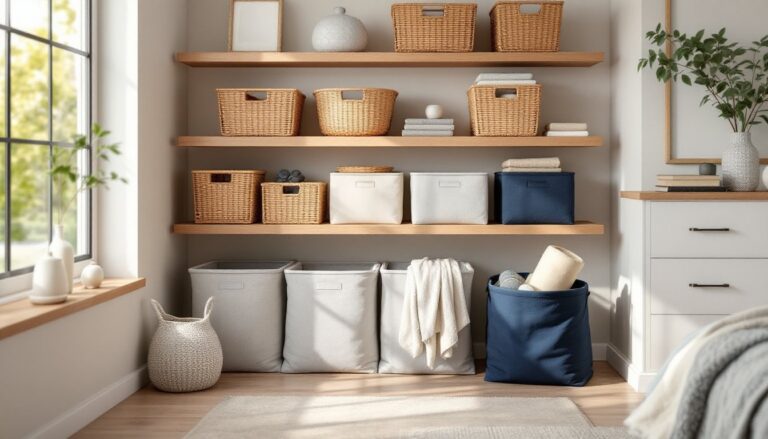
Bedrooms and Closets are where baskets shine brightest. Use tall, narrow baskets to corral rolled sweaters, scarves, or off-season items on shelves. Shallow, wider baskets work better inside dresser drawers for socks, underwear, or folded tees, they prevent piles from toppling and make it easy to see what you have. A rattan basket at the foot of the bed catches daily clothes you’re unsure about keeping: it buys time before the wash pile gets overwhelming. Plan for at least one basket per 2–3 feet of linear closet shelf space.
Bathrooms benefit from medium baskets on open shelving or under sinks. Corral hair tools, cleaning supplies, or rolled hand towels. Seagrass or rattan handles moisture better here than fabric. If your bathroom gets steamy, ensure baskets have some airflow, don’t stack them directly against walls. Smaller baskets ($2–$10 fabric or $15–$25 natural fiber) work well for guest soaps or first-aid supplies.
Living Rooms and Family Spaces use baskets to manage the chaos of remote work, kids’ toys, or media. A large basket beside the sofa corrals throw pillows, blankets, and remotes, it looks intentional, not scattered. Kids’ toy zones benefit from clear labeling and multiple smaller baskets (easier to grab and pour out than one giant bin). Fabric baskets are fine here since they don’t need to be durable forever: kids outgrow toys regularly. Expect to replace or repurpose these every 2–3 years.
Kitchens and Pantries use baskets for non-perishable snacks, baking supplies, or fresh produce. A woven rattan or seagrass basket on the counter for potatoes, onions, or garlic adds function and style. Inside pantries, baskets corral like items, baking tools in one, breakfast cereals in another, pasta boxes in a third. This system saves money because you don’t overbuy when items are grouped. Line pantry baskets with kraft paper to prevent crumbs from settling on the bottom.
Entryways are where baskets earn their keep daily. A basket by the door holds keys, mail, sunglasses, and shoes, everything you need to grab on the way out. Use a sturdy natural fiber basket here: it’ll take daily wear. Label or color-code baskets if multiple people share the space. A small fabric basket on a shelf above handles accessories, hats, or dog leashes.
For homeowners managing multiple storage needs, checking Unlocking Efficient Storage: Tips helps align basket placement with overall home organization systems.
Styling and Integrating Baskets Into Your Décor
Function matters, but baskets also need to look intentional, not like you dumped storage solutions randomly around your home.
Match your baskets to your existing décor palette. In a neutral, minimalist space, stick to natural fibers (rattan, seagrass) or simple linen. In a colorful, eclectic room, patterned fabric baskets or painted wicker add visual interest. Avoid mixing too many textures or colors, a room with wicker, canvas, wire, and plastic baskets looks chaotic. Aim for two or three coordinating basket styles max.
Scale and proportion matter. A tiny basket on a large, empty shelf looks lonely: a giant basket in a small, tight space overwhelms. Use baskets that occupy about 60–75% of a shelf’s depth, leaving breathing room. Group baskets in odd numbers (three small ones rather than two medium ones) when styling shelves: it looks more curated.
Label your baskets, not just for style but for function. Use a label maker, adhesive chalkboard stickers, or fabric tape. Clear labeling prevents the basket where “miscellaneous stuff” lives, which becomes a black hole. It also helps family members know where to return items.
Visit Real Simple’s 20 Stylish Basket Organization Ideas for high-impact styling examples, and Martha Stewart’s 25 Clever Basket Organizing Ideas for room-specific approaches. IKEA Hackers’ Basket Hacks showcase how to modify or repurpose affordable baskets for custom storage fits.
Consider Best Storage Prices: Unlock Hidden Deals to source quality baskets without overspending, smart shopping means more money for styling or larger projects.
Conclusion
Basket storage bins aren’t just a trend: they’re a practical, forgiving way to organize any room without breaking your budget or your aesthetic. By choosing the right material for your space, sizing appropriately, and styling thoughtfully, you create an organized home that feels open and intentional. Start with one room, test what works, and expand from there.