


Table of Contents
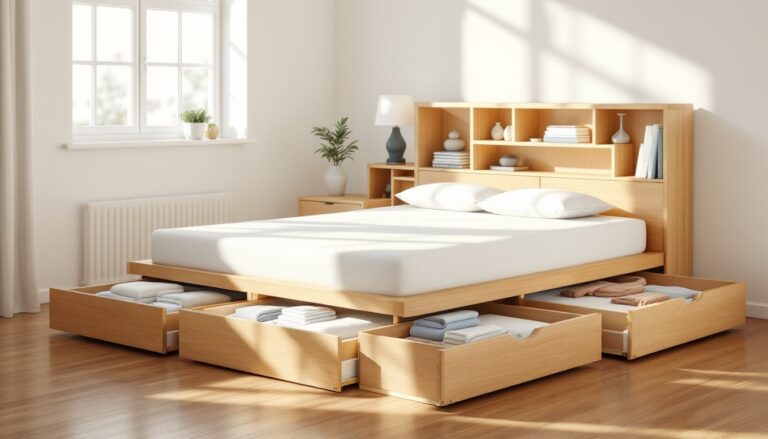
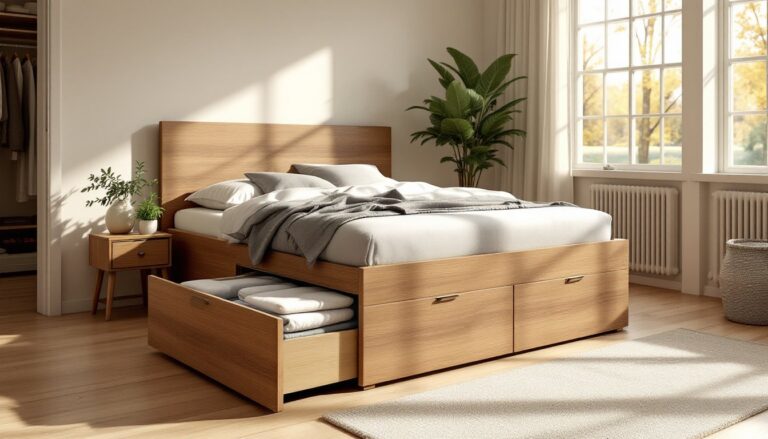
ToggleA twin storage bed with drawers is one of the smartest space-saving investments a homeowner can make, especially in smaller bedrooms, guest rooms, or kids’ spaces. Instead of a standard frame that sits empty underneath, these beds put dead space to work, storing everything from seasonal bedding to toys, shoes, or off-season clothing. They’re equally popular in cramped apartments and larger homes where consolidating furniture makes sense. Whether you’re furnishing a child’s room, maximizing a tiny guest bedroom, or just tired of clutter, a twin storage bed with drawers offers both function and flexibility without sacrificing style or comfort.
Key Takeaways
- A twin storage bed with drawers maximizes small bedrooms by eliminating wasted under-bed space while keeping floor areas open and maintaining good traffic flow.
- Twin storage beds feature flexible drawer configurations (typically two to three drawers) with 60–90 liters of capacity per drawer, making them ideal for storing seasonal items, toys, and bedding.
- Material choice matters: solid wood is durable but pricey, while quality plywood and MDF offer stability and affordability—select based on budget, humidity levels, and maintenance tolerance.
- Before purchasing, measure your room’s footprint and drawer extension depth (typically 18–24 inches when fully open) to ensure drawers don’t block doorways or closets.
- Budget ranges from $300–$1,500 depending on material quality, with local pickup and in-person testing of drawer slides providing better value than budget online options with high shipping costs.
- Most twin storage bed assemblies require 2–3 hours with a helper and basic tools like a power drill, level, and mallet; regular maintenance includes vacuuming drawers, applying silicone lubricant to slides, and checking hardware annually.
Why Twin Storage Beds With Drawers Are Perfect for Modern Homes
Twin storage beds solve a real problem: bedrooms have more stuff than storage. A standard twin bed frame takes up roughly 39 inches wide by 75 inches long, but leaves the entire undercarriage empty. A storage version reclaims that real estate instantly.
The practical benefits are clear. Kids accumulate toys, books, and seasonal gear. Guest rooms need somewhere to stash extra pillows and blankets without a separate linen closet. Dorm rooms and studio apartments don’t have the luxury of dedicated storage furniture. A twin storage bed with drawers eliminates the need for a separate dresser or under-bed storage boxes, which keeps the floor open and the room feeling larger.
Beyond function, they’re also a visual win. Modern twin storage beds come in clean-lined designs that fit contemporary bedrooms, farmhouse aesthetics, or transitional spaces. The drawers are typically recessed (not protruding randomly into the floor), so the room maintains good traffic flow. If you’re working with tight square footage, that’s worth its weight in gold. You get a bed, storage, and an uncluttered footprint, all at once.
Key Features and Design Options to Consider
Storage Capacity and Drawer Configurations
Twin storage beds come in several drawer layouts. The most common is a two-drawer design, where full-width drawers run along one or both long sides of the frame. Some models use three narrower drawers, giving you more sorting flexibility, one for clothes, one for bedding, one for off-season items, for example.
Capacity varies by drawer depth and width. A typical full-width drawer holds 60–90 liters of volume. If you’re storing bulky items like comforters or sleeping bags, plan on about two to three items per drawer before it gets tight. Soft goods compress well: harder items like board games or shoe boxes take up more usable space.
Consider whether you need drawers on both sides or just one. Single-side drawers leave one side of the bed flush to the wall, which works better in tight corners. Dual-side drawers maximize storage but demand clear space on both sides for access, not practical against a corner or in a really cramped room.
Material and Style Choices
Most twin storage beds use solid wood (pine, oak, or maple), plywood, or medium-density fiberboard (MDF). Solid wood is durable and looks great but costs more and can move with humidity changes over time. Plywood and quality MDF are stable, affordable, and fine for bedrooms with moderate humidity. Don’t write off MDF, modern versions handle weight well if assembled correctly.
Finishes range from natural stain (showing wood grain) to painted options (white, gray, black, or custom colors). Painted beds hide dust and scratches better than stain, which matters in kids’ rooms. Stain showcases the wood but demands more frequent touch-ups.
Style-wise, woodworking project plans and furniture building tutorials offer inspiration if you’re considering a custom build. Commercial options typically lean into modern, transitional, or cottage farmhouse aesthetics. Leg height matters too, beds set on low legs (2–4 inches) feel more grounded and contemporary, while higher legs (6–8 inches) offer more visual lightness and easier under-bed access for cleaning.
How to Choose the Right Twin Storage Bed for Your Space
Measure your room first, it sounds obvious, but many people buy a bed and realize the drawers hit a doorway or the foot of the bed blocks a closet. Confirm the bed’s overall footprint (width and length) plus drawer extension depth when fully open. Some drawers pull out 18–24 inches, so you need that much clearance.
Think about access patterns. If the bed goes against a wall, single-side drawers make sense. If it’s an island piece in the middle of the room, dual-side drawers justify the floor space investment. Consider who’s using it, kids need easy-to-reach, shallow drawers: adults can handle slightly deeper or lower-mounted ones.
Weight capacity matters, especially if you’re storing heavy items like books or tools in the drawers. Most twin storage beds safely hold 200–300 pounds on the mattress plus another 100–150 pounds distributed across drawers. Check the manufacturer’s specs, and don’t overload a single drawer, spread weight evenly.
Budget ranges from $300–$400 for basic particle-board models to $800–$1,500 for solid wood beds from quality makers. Prices fluctuate with lumber costs and regional availability. In 2026, shipping and local availability matter as much as the sticker price, a $500 bed with free local pickup beats a $450 online bed with $200 shipping. Test drawers in person if you can: smooth-gliding ball-bearing slides feel worlds better than cheap wooden guides.
DIY Installation and Maintenance Tips
Most commercial twin storage beds arrive flat-packed and require assembly. Set aside 2–3 hours and grab a helper, bed frames are awkward solo, especially when fastening side rails. You’ll typically need a power drill with Phillips and flathead bits, a mallet or rubber hammer for tapping joints, and a level to confirm the frame sits flat.
Start by reading the instruction manual completely before opening a single bolt. Lay out all parts and hardware to confirm nothing’s missing. Assemble the side rails and end panels first, then install the drawer slides and supports, and finally attach the mattress support (usually a wood or plywood platform). Tighten all bolts fully, loose hardware causes squeaks and premature wear.
If you’re building a custom twin storage bed from scratch, resources like beginner woodworking projects and DIY furniture guides and detailed step-by-step DIY project tutorials provide solid foundations. You’ll need basic tools (circular saw or miter saw, drill, kreg jig for pocket holes, square, measuring tape) and lumber, typically 2×8 or 2×10 boards for the side rails, 1×12 or 1×10 boards for drawer fronts, and 3/4-inch plywood for drawer bottoms and the mattress platform.
For maintenance, vacuum drawer interiors every few months to prevent dust accumulation. Wipe down wood or painted surfaces with a dry or slightly damp cloth: avoid water pools that can swell particleboard. Drawer slides sometimes squeak after a year or two, a light coat of silicone lubricant on the slides solves this. Check bolts and screws annually, especially if the bed gets heavy use or moves around.
Conclusion
A twin storage bed with drawers is a practical, space-efficient choice that pays dividends in smaller bedrooms and multipurpose spaces. It replaces the bed and dresser, clears floor clutter, and delivers reliable storage without taking up extra footprint. Whether you buy a finished model or build one, the payoff is immediate: a cleaner room and less wasted space underfoot. For homeowners ready to maximize their square footage and simplify their bedroom layout, it’s a no-brainer investment.