


Table of Contents
ToggleIf you’re watching your bedroom shrink under the weight of off-season clothing, holiday decorations, and things you swear you’ll use someday, an under storage bed might be the solution you’ve been waiting for. These beds aren’t luxury furniture, they’re practical space management. Whether you’re living in a cramped apartment, furnishing a guest room, or just tired of storage battles, an under storage bed transforms dead space beneath your mattress into functional square footage. Small bedrooms don’t require small solutions: they require smart ones. Let’s walk through everything you need to know about choosing, setting up, and organizing one of the most efficient pieces of furniture a homeowner can own.
Key Takeaways
- An under storage bed provides 40 to 60 cubic feet of hidden storage capacity—equivalent to a small closet—without adding floor space or requiring additional furniture purchases.
- Under storage beds typically cost between $400 and $1,200 and deliver better value than traditional storage solutions like chest of drawers or closet renovations, making them ideal for renters and budget-conscious homeowners.
- Choosing the right under storage bed requires measuring bedroom dimensions, ceiling height, and climate conditions, then selecting materials (solid wood, engineered wood, or metal) that match your décor style.
- Proper assembly takes 2 to 4 hours and benefits from a second pair of hands; organizing by category, using clear labeled bins, and maintaining a simple inventory prevents unused storage and maximizes accessibility.
- An under storage bed works best with thoughtful organization—assigning each drawer a purpose, rotating items seasonally, and spreading weight evenly to avoid exceeding the typical 800 to 1,200-pound weight limit.
What Is An Under Storage Bed And Why It Matters For Small Spaces
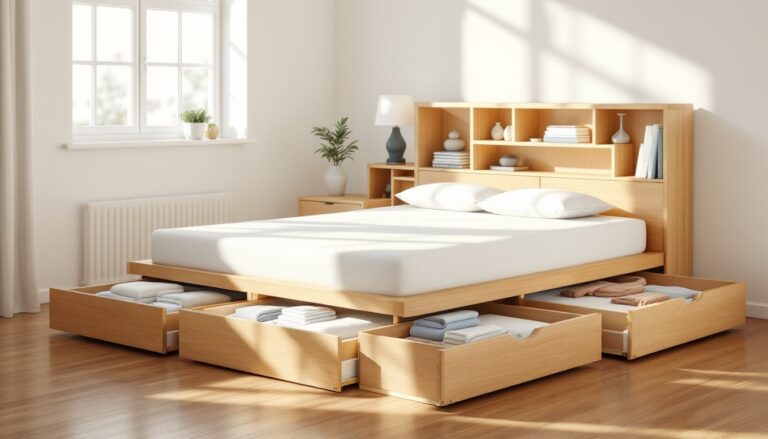
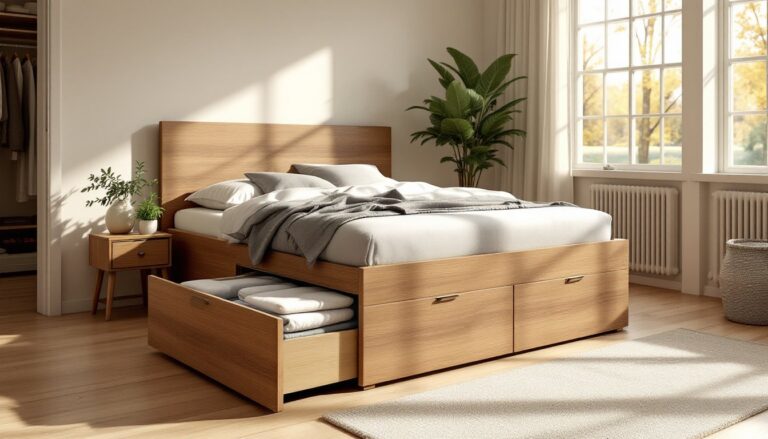
An under storage bed is exactly what it sounds like: a bed frame designed with clearance underneath to accommodate drawers, bins, or shelves for storing items. The standard height of most under storage beds sits between 18 and 24 inches (measured from floor to the bottom of the mattress), compared to 8 to 12 inches for platform beds. This extra clearance gives you substantial usable storage without eating into your floor plan.
Why does this matter? A typical under storage bed can hold 40 to 60 cubic feet of gear, equivalent to a small closet. For anyone juggling space constraints, that’s often 10% to 20% of a bedroom’s total storage capacity. The beauty is that this storage is hidden beneath your bed, so it doesn’t clutter your visual space or require additional furniture purchases.
Under storage beds are particularly valuable in bedrooms under 100 square feet, studio apartments, or homes where closet space is limited. They’re also practical for families, guest rooms, and anyone with seasonal items that don’t fit neatly into existing wardrobes.
Key Benefits For Homeowners And Renters
Space efficiency tops the list. You’re leveraging vertical real estate that would otherwise sit empty. No extra floor footprint, no wall space needed, and no decorative sacrifices. Most homeowners report freeing up 8 to 12 linear feet of closet space after installing an under storage bed.
Affordability is another win. A quality under storage bed typically runs between $400 and $1,200, depending on materials and whether drawers are included. Compare that to the cost of a chest of drawers, a standalone storage unit, or adding closet space, under storage beds consistently deliver better value.
For renters, under storage beds are goldmines. You get permanent storage gains without renovations, and you can take the bed with you when you move. No landlord approval needed: no nails in walls.
Organization becomes easier too. Drawer-style beds let you assign zones, one drawer for off-season clothing, another for bedding, a third for rarely-used items. This beats digging through dark closet corners or stacking bins on high shelves where you can’t see what’s inside.
Finally, under storage beds work well with existing décor. They don’t announce themselves like a filing cabinet or industrial shelving. They look like regular beds, which means they’re a low-friction way to add function to any bedroom style.
Styles And Materials To Match Your Decor
Under storage beds come in solid wood, engineered wood (plywood and MDF), and metal frames. Solid wood, oak, walnut, maple, offers durability and warmth but comes at a price premium and requires more maintenance (occasional oiling, monitoring for moisture). Engineered wood frames are budget-friendly, lighter to move, and resist warping in humid climates, though they’re less robust long-term than solid wood.
Metal under storage beds are common in industrial or modern spaces. They’re sturdy, affordable, and don’t swell or warp. If you’re going for minimalist or contemporary design, metal works cleanly.
Style matters to your bedroom’s feel. Platform-style under storage beds sit low and modern, perfect for Scandinavian or contemporary rooms. Bed frames with legs (often called “lifted” frames) expose more floor space visually and pair well with farmhouse, cottage, or traditional décor. Upholstered beds with under storage add softness and work in transitional or eclectic schemes.
Drawer configuration varies too. Some beds feature two large drawers on wheels: others have four or six smaller drawers. Larger drawers are easier to load but take more effort to slide. Smaller drawers offer flexibility, one for linens, one for off-season items, but feel more segmented.
Color and finish are straightforward: neutrals like gray, white, and black blend into most bedrooms. If your room’s a blank slate, your under storage bed is a safe anchor: if you’ve already chosen a color palette, match the bed’s finish to your nightstands or dresser. This creates visual harmony without looking too coordinated.
How To Choose The Right Under Storage Bed For Your Bedroom
Start by measuring your bedroom floor space. You need width and length of the bed, plus clearance on all sides for doors, windows, and traffic flow. A queen bed is roughly 60 inches wide by 80 inches long: a twin is 39 by 75. Factor in 24 to 36 inches of walking space around the bed if possible.
Next, measure ceiling height. If your ceiling is 8 feet and your under storage bed is 24 inches tall, you’ve got 72 inches above the mattress, plenty of headroom. If you’re living in a loft or low-ceiling room, this matters. Standard low-profile beds (14 to 16 inches tall) may be safer in tight quarters, though they offer less under-bed storage.
Consider your climate. Humid regions benefit from engineered wood or metal frames because solid wood can cup or swell. Dry climates are kinder to solid wood. If you live in a basement bedroom or near a bathroom, ventilation beneath the bed becomes important, make sure drawers or bins don’t completely seal off airflow.
Think about your storage needs right now. Are you storing soft items (clothing, linens, blankets) or harder goods (tools, sporting equipment, hobby supplies)? Soft goods work in shallow drawers: hard goods often need more robust, deeper storage. If you’re a light packer, a bed with two drawers is plenty. Heavy accumulators need four or more.
Budget flexibility matters. Entry-level under storage beds ($400–$600) often have solid construction but fewer customization options. Mid-range beds ($600–$1,000) offer better materials and drawer configurations. Premium beds ($1,000+) typically mean solid wood, heirloom durability, and finish choices. Identify what you’d spend, then see what fits.
Installation And Setup Tips
Most under storage beds arrive flat-packed and require assembly. Plan for 2 to 4 hours depending on complexity and whether you’ve got help. Recruit a second pair of hands for queen and larger sizes, positioning the frame and securing cross-braces is easier with support.
Read the instructions before you open the box. Seriously. Missing steps or reversed order are common DIY mistakes. Lay out all parts on the floor (or on a large tarp outdoors) so you can see what you’re working with.
Use a cordless drill with a square drive bit for faster screw insertion. Hand-tightening every screw takes forever. Tighten connections incrementally rather than fully tightening one side then the other, this prevents frame racking (twisting out of square). Finish one section, check diagonal measurements to ensure it’s square, then move on.
For beds with drawers, assemble and test them on the frame before placing your mattress. Drawers should glide smoothly without binding. If they catch, check that the frame is square. Humidity swelling can also cause this: if it’s a new bed in humid weather, wait a few days before declaring it broken.
Set the bed on a solid, level floor. Hardwood works fine: carpet works too. Avoid concrete basements or crawl spaces unless you’ve got vapor barriers in place, moisture underneath promotes mold and mildew. If you do place a bed on carpet, check periodically that the carpet hasn’t bunched under the frame legs.
Organization Strategies For Maximum Efficiency
Once your bed is assembled, organization determines whether you actually use that storage or just shove stuff in and forget it. Unlocking Efficient Storage: Tips starts with dividing and labeling.
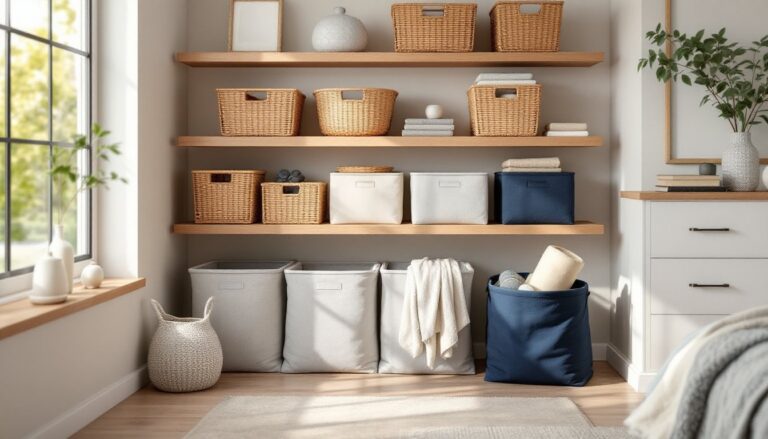
Group by category. One drawer for off-season clothing, another for linens and pillows, a third for rarely-used items (holiday décor, craft supplies, reference books). Assign each drawer a purpose before you load it. This prevents the bedroom equivalent of a junk drawer.
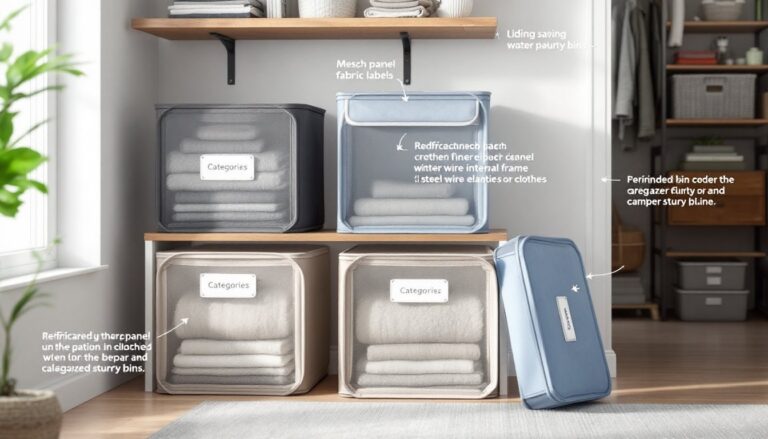
Use clear plastic storage bins inside drawers to subdivide further. A queen bed drawer might hold four 10-inch plastic bins standing upright. Label each bin, “Winter coats” or “Guest linens”, so you don’t have to open everything. Clear plastic beats opaque bins because you can see contents at a glance, especially helpful if you need to retrieve something quickly.
For items you rarely access (seasonal decorations, backup linens), place them toward the back of deeper drawers or in lower drawers if your bed has stacked levels. Reserve front, accessible drawers for items you rotate monthly, off-season clothing, rotating hobby supplies, stuff you actually need.
Rotate items seasonally. As weather changes, swap winter coats for summer shorts. This maximizes drawer space without overflow. If you’re storing textiles, consider breathable storage bags over vacuum-sealed ones, compressed fabrics can hold odors, and vacuum bags sometimes leak air over time anyway.
Keep a simple inventory. A small notebook or phone note listing “Drawer 1: Linens” prevents you from double-storing items elsewhere. It sounds fussy, but it saves you from buying duplicate bedding because you forgot what’s already stored underneath.
Check your bed’s weight limits. Most under storage beds handle 800 to 1,200 pounds total (mattress plus contents). That sounds like plenty, but it adds up fast. A fully loaded queen bed with four drawers stuffed with books, tools, or other dense items can approach limits. Spread weight evenly and avoid stacking all heavy items in one drawer.
Conclusion
An under storage bed isn’t just furniture, it’s a space-solving investment. Whether you’re furnishing a small room on a budget, a renter needing flexibility, or anyone tired of storage scrambling, it delivers square footage you’ve already paid for with your home.
The key is choosing the right style and size for your space, setting it up correctly, and organizing deliberately. Budget-Friendly Storage: Creative Solutions paired with smart layout keeps your bedroom functional and clutter-free. Done right, an under storage bed quietly handles your overflow while your bedroom remains calm, spacious, and inviting.