



Table of Contents
ToggleAn upholstered king bed with storage isn’t just a place to sleep, it’s a dual-purpose investment that solves the storage puzzle many homeowners face in the bedroom. King-size upholstered beds have become standard in master bedrooms, offering a generous sleeping surface with the added bonus of built-in storage solutions that maximize square footage. Whether you’re furnishing a new home, upgrading to a larger bed, or looking to reduce bedroom clutter, understanding what to look for in an upholstered king bed frame with storage will help you choose the right piece that balances comfort, style, and practicality for your space.
Key Takeaways
- An upholstered king bed with storage solves two bedroom problems at once: it provides a spacious sleeping surface and eliminates clutter by offering 40–60 cubic feet of hidden storage capacity, roughly equivalent to a large closet.
- Choose upholstery materials based on your lifestyle: performance fabrics resist stains and work best for families with pets or children, while natural linen requires more maintenance but offers sophistication in low-traffic rooms.
- Full-extension drawer glides, quilted or tufted headboards, and neutral color palettes (grays, taupes, soft blues) make an upholstered king bed a versatile statement piece that works with seasonal bedding updates.
- Proper maintenance—weekly vacuuming, prompt spot-cleaning, UV protection, and annual hardware checks—extends the lifespan of your upholstered bed from five years to fifteen years or longer.
- Upholstered beds absorb sound better than metal or wood frames and add warmth and texture to your bedroom, creating a finished focal point that anchors your entire room’s aesthetic.
Why Choose an Upholstered King Bed With Storage
A king-size upholstered bed delivers more sleeping surface than a queen, giving couples or solo sleepers who like sprawl room to breathe. Add storage underneath, and you’ve solved two bedroom problems at once: lacking seating/back support and lacking closet space.
Upholstered beds absorb sound better than metal or wood frames, making them quieter when someone gets up at night. The fabric or leather covering also adds warmth and texture to a room, creating a focal point that anchors the entire bedroom design. Unlike a utilitarian platform bed, an upholstered frame feels intentional and finished.
Storage underneath, typically in the form of drawers or lift-up mechanisms, keeps seasonal clothing, extra bedding, or shoes out of the way but easily accessible. This is especially valuable in smaller master suites or homes without dedicated closets. You gain functional space without sacrificing the visual calm of a clutter-free bedroom.
Key Features and Storage Solutions to Look For
Under-Bed Drawers and Hidden Compartments
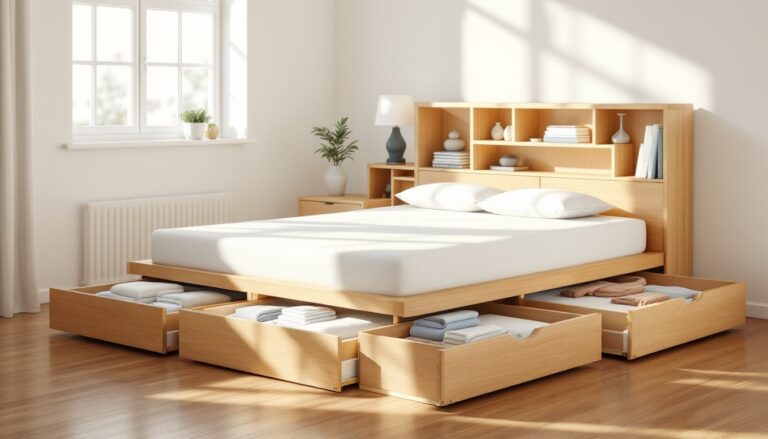
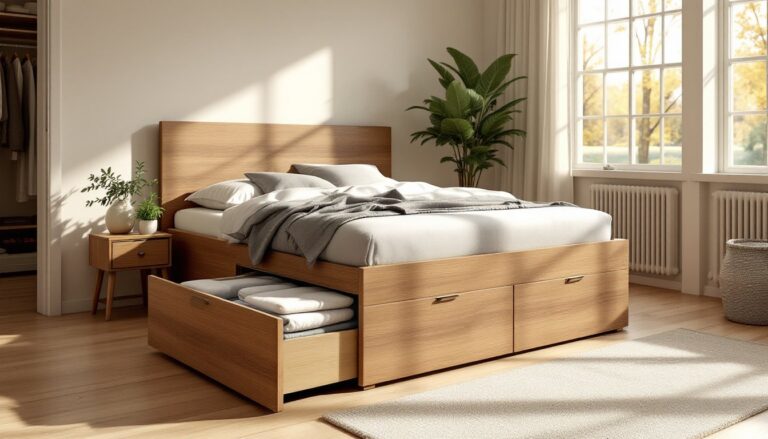
Drawer storage is the most practical solution for an upholstered king bed. Look for drawers with full-extension glides (not partial), which let you access the back without struggling. Hardwood or plywood construction is more durable than particle board.
Some upholstered beds offer side drawers, rear drawers, or a combination. A bed with four full drawers (two on each long side) offers the most capacity. Each drawer typically holds about 10–15 cubic feet of items, so a four-drawer setup gives you 40–60 cubic feet of hidden storage, roughly equivalent to a large closet.
Lift-up mechanisms on the platform itself are another option. The entire mattress and frame lift to reveal a large under-bed compartment. These are ideal for bulky items like off-season comforters or suitcases, but they’re heavier to operate and require careful inspection of the hydraulic hinges for durability. Make sure they lock in the open position so the frame doesn’t slam shut unexpectedly.
Upholstery Materials and Durability Considerations
The fabric or leather covering determines how well your upholstered bed ages and how much maintenance it requires.
Polyester and poly-linen blends are budget-friendly and come in a wide range of colors and textures. They’re less prone to wrinkling than natural fabrics but can pill over time if not treated with a performance finish.
Natural linen breathes well and looks sophisticated, but it stains easily and wrinkles considerably. Reserve linen for low-traffic master bedrooms or pair it with a fabric protectant.
Genuine leather is durable and improves with age, but it’s expensive and requires conditioning to prevent cracking. It also shows dust and pet hair more readily.
Performance fabrics (branded options from Crypton, Sunbrella, or similar) are treated to resist stains and are often solution-dyed, meaning color won’t fade as quickly. These are the best choice for families with pets or children, even though they cost more upfront.
Whatever material you choose, check the fabric weight (measured in GSM, grams per square meter). Upholstered beds see a lot of contact, so aim for 300+ GSM for longevity. Also verify that the covering is removable and machine-washable, or that a professional cleaning service can handle it. Interior design experts at Houzz often highlight durability as the overlooked factor in furniture selection, but it’s what separates a five-year purchase from a fifteen-year investment.
Styling and Design Tips for Your Master Bedroom
An upholstered king bed is a statement piece, so let it anchor your room’s aesthetic.
Choose a neutral or versatile color if you plan to update bedding seasonally. Grays, taupes, and soft blues act as backdrops and work with nearly any accent color. Bold colors (navy, emerald, charcoal) are stunning but can feel oppressive in smaller rooms and limit future redesigns.
Consider texture for visual interest. A linen-blend with a subtle weave or a velvet upholstery in a neutral tone adds dimension without clashing with other furnishings. Quilted or tufted headboards are on-trend and hide wear better than plain fabric.
Balance the bed’s scale. A king bed is large: pair it with a low dresser, wall-mounted shelving, or a pair of floating nightstands to avoid a cramped, furniture-heavy look. Tall headboards (48–60 inches) visually expand small rooms: shorter ones (36 inches) work better in low-ceilinged spaces.
Layer with bedding intentionally. A high-quality mattress, fitted sheet, flat sheet, duvet or coverlet, and accent pillows should complement the upholstery, not fight it. Bedding trends shift, so invest in the bed frame and refresh linens as your style evolves. Elle Decor regularly showcases upholstered beds in contemporary and traditional bedroom designs, offering real-world inspiration for mixing textures and colors.
Maintenance and Care for Long-Lasting Quality
Proper care extends the life of your upholstered king bed significantly.
Vacuum weekly with an upholstery attachment to remove dust, pet hair, and skin cells that settle into fabric fibers. This prevents buildup that can trap moisture and cause odors.
Spot-clean spills immediately with a damp cloth and mild detergent. Don’t oversaturate the fabric: use a spray bottle for precision and blot rather than rub. Test any cleaner on a hidden section first (the bottom of the headboard is ideal).
Protect from direct sunlight. UV rays fade upholstery and weaken fibers over time. Use blackout curtains, thermal shades, or strategic furniture placement to block harsh morning or afternoon light.
Rotate and flip the mattress every two to three months to distribute wear evenly. This isn’t specific to upholstered frames, but it’s worth emphasizing because people often neglect it.
Check drawer glides and hinges annually. Tighten any loose bolts or hardware, and lubricate glides with a silicone-based furniture lubricant if drawers start to stick. This prevents damage that’s expensive to repair.
Professional cleaning every 1–2 years (depending on use) keeps the fabric looking fresh and removes embedded dirt that vacuuming can’t reach. Many upholstered pieces benefit from professional conditioning if leather is involved. Resources like Homedit occasionally feature detailed guides on extending furniture lifespan, emphasizing that proactive maintenance is cheaper than replacement.
Conclusion
An upholstered king bed with storage is a smart investment for any homeowner seeking both comfort and function. By prioritizing solid construction, durable upholstery, practical storage solutions, and thoughtful design, you’ll select a piece that serves your needs for years to come. Take time to evaluate materials, test the drawer mechanisms in person if possible, and choose a fabric or leather that fits your lifestyle, not just your aesthetic. The right bed does far more than anchor your bedroom: it sets the tone for restful sleep and smart space management.